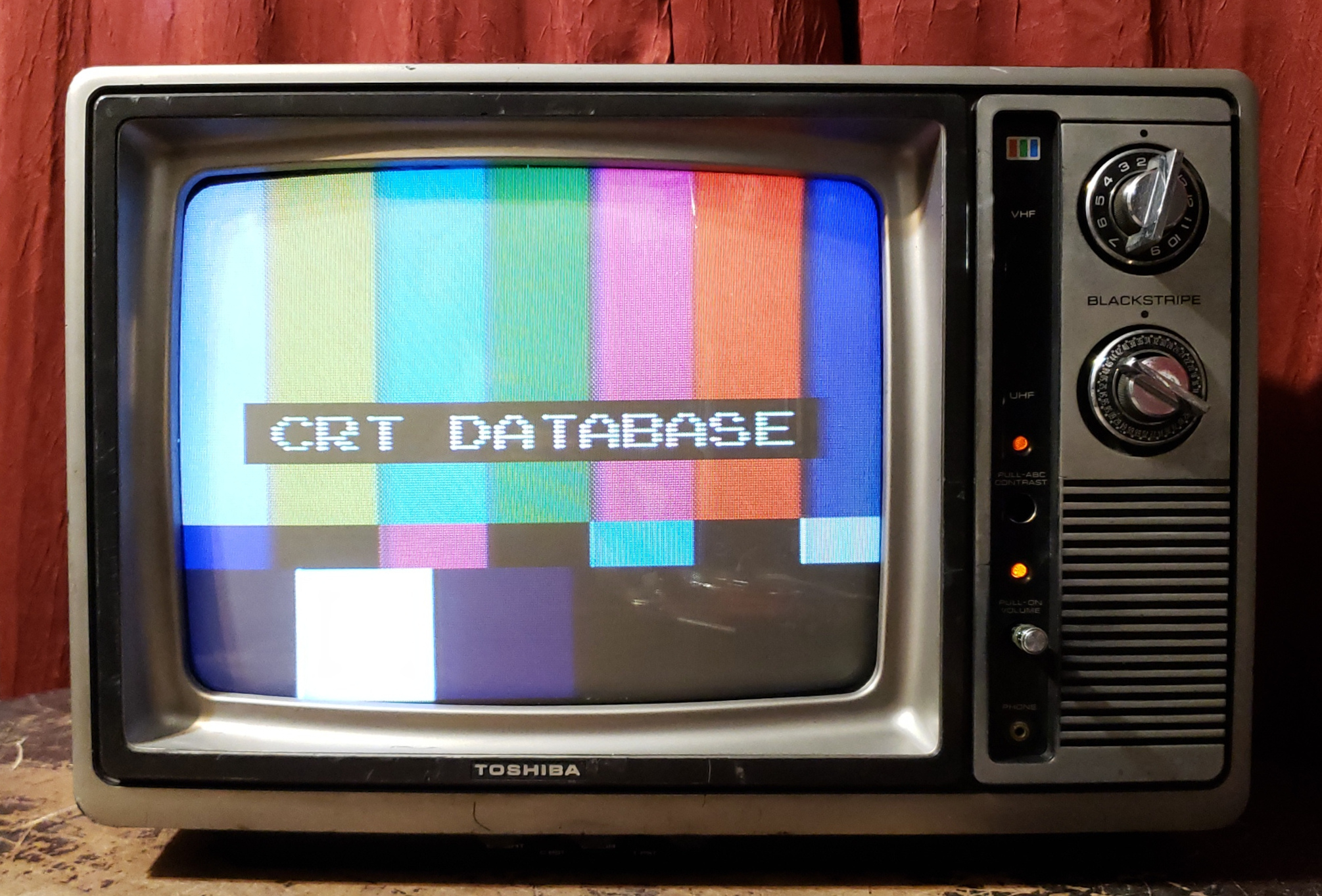
Summary
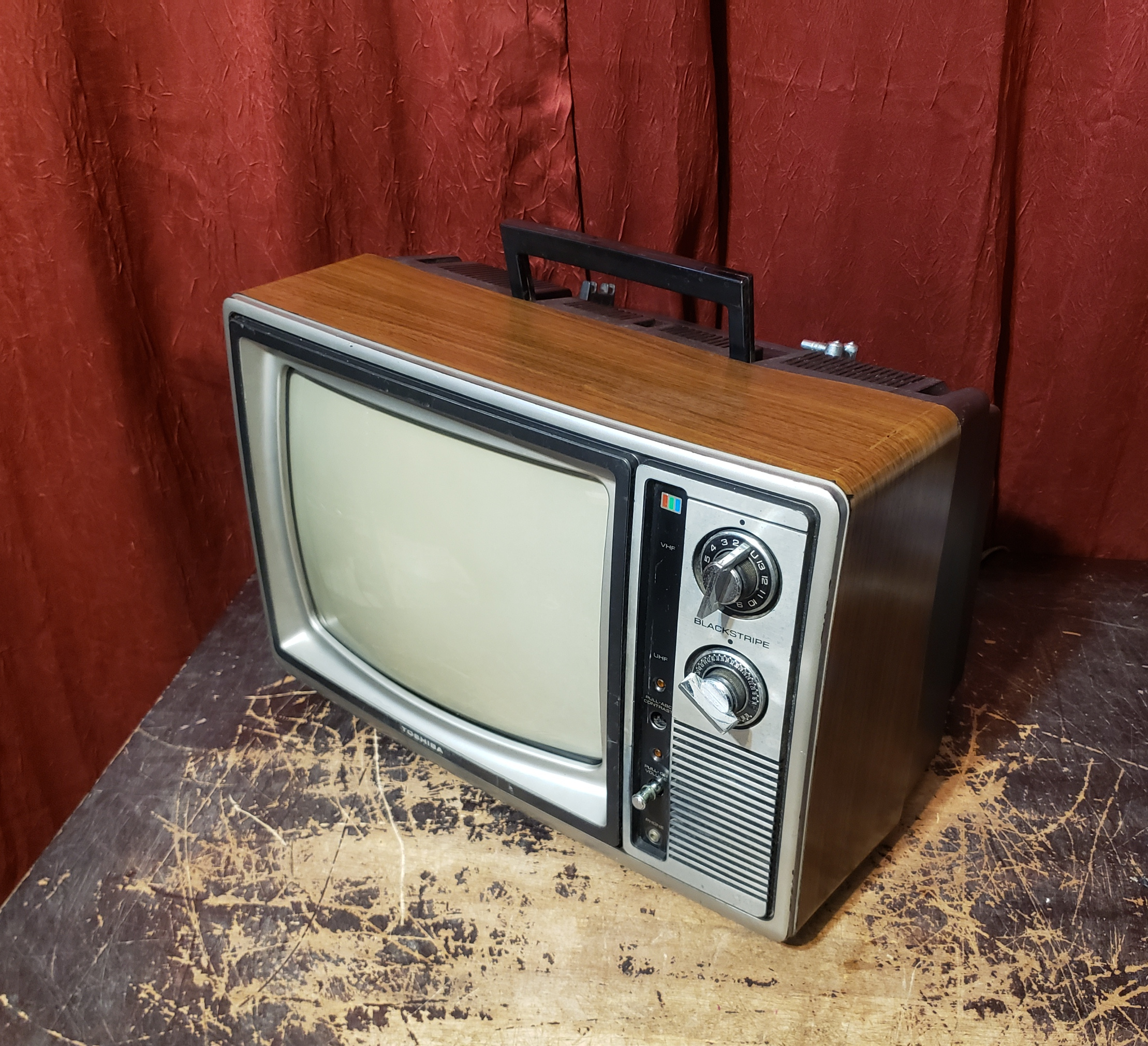
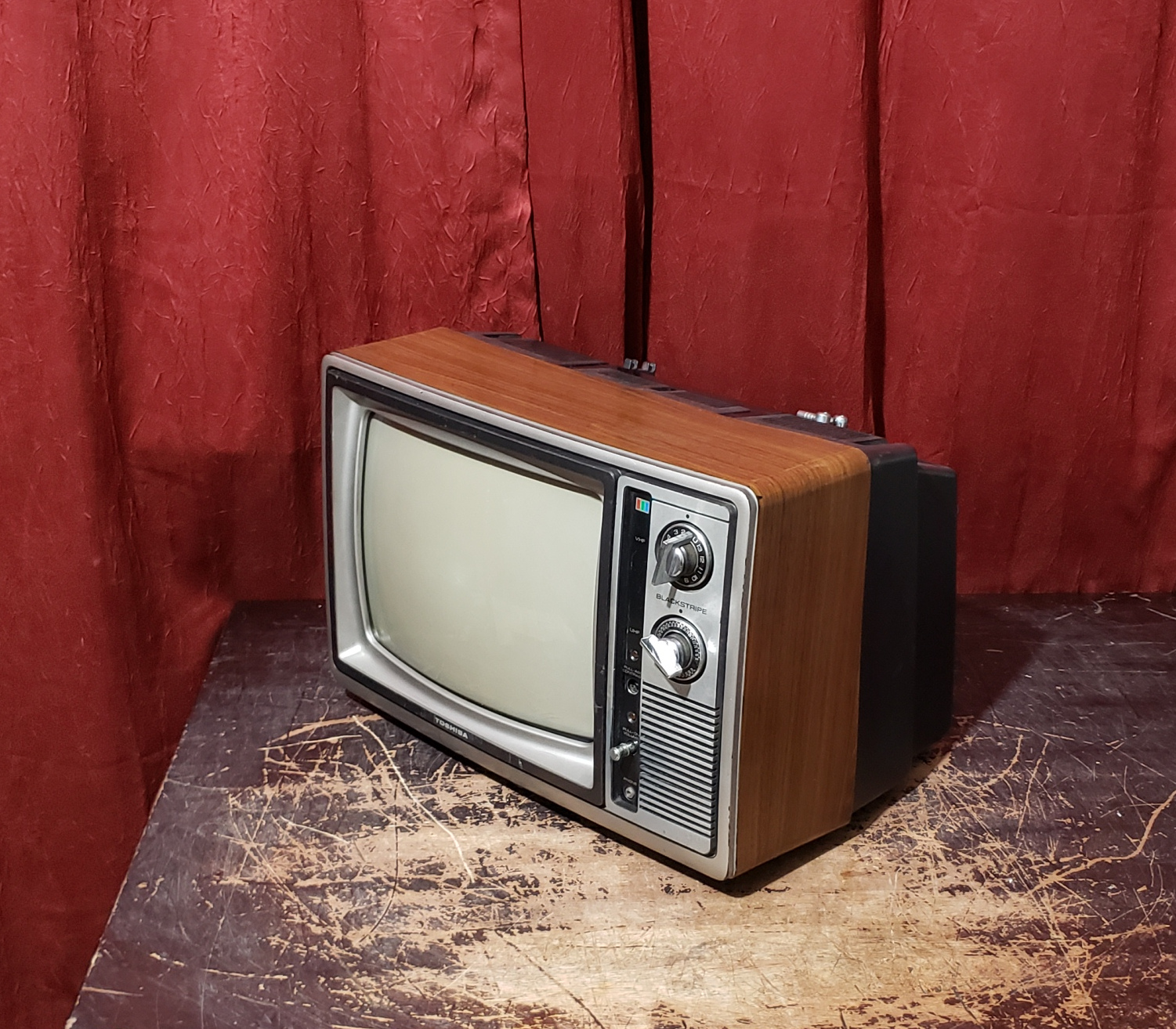
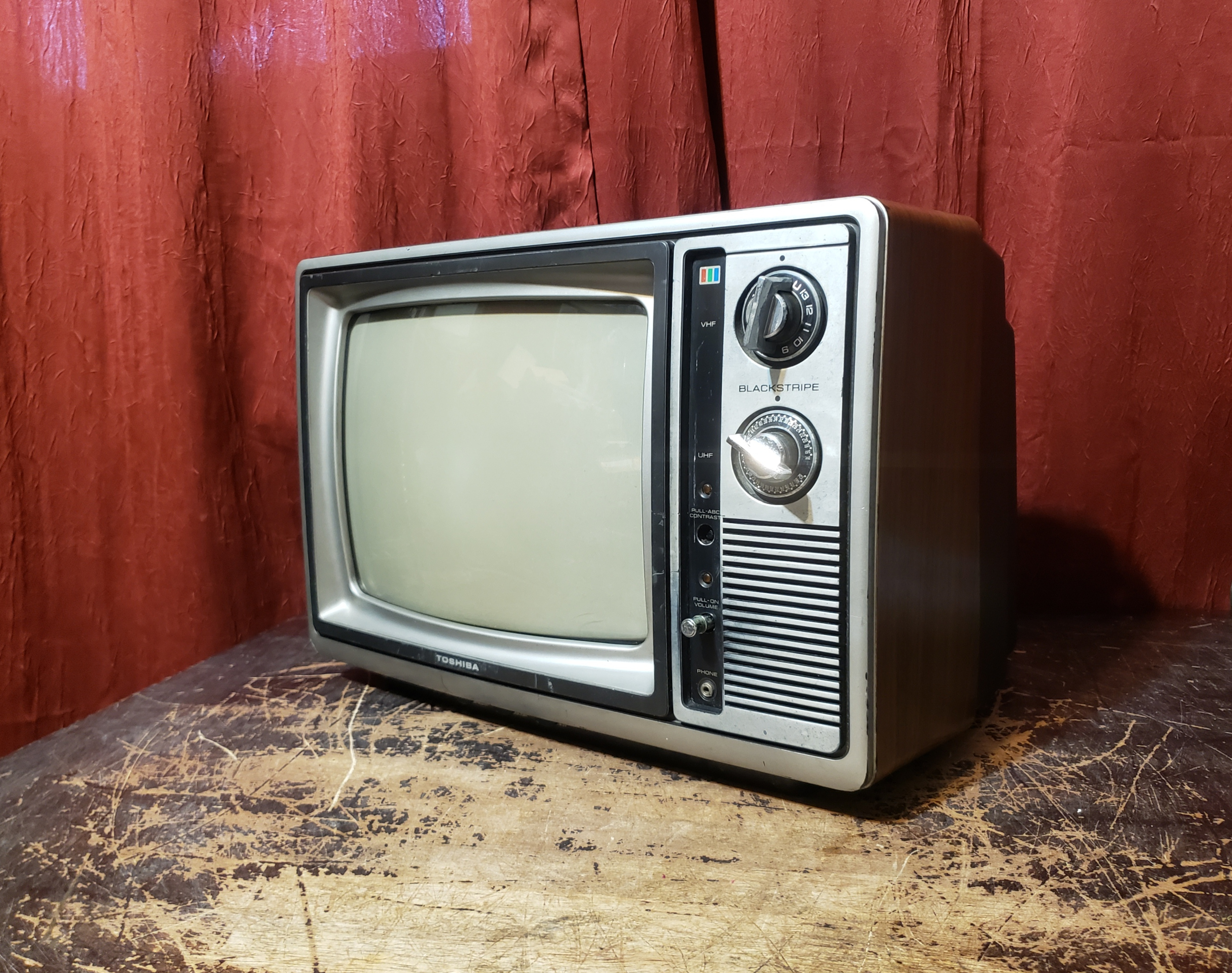
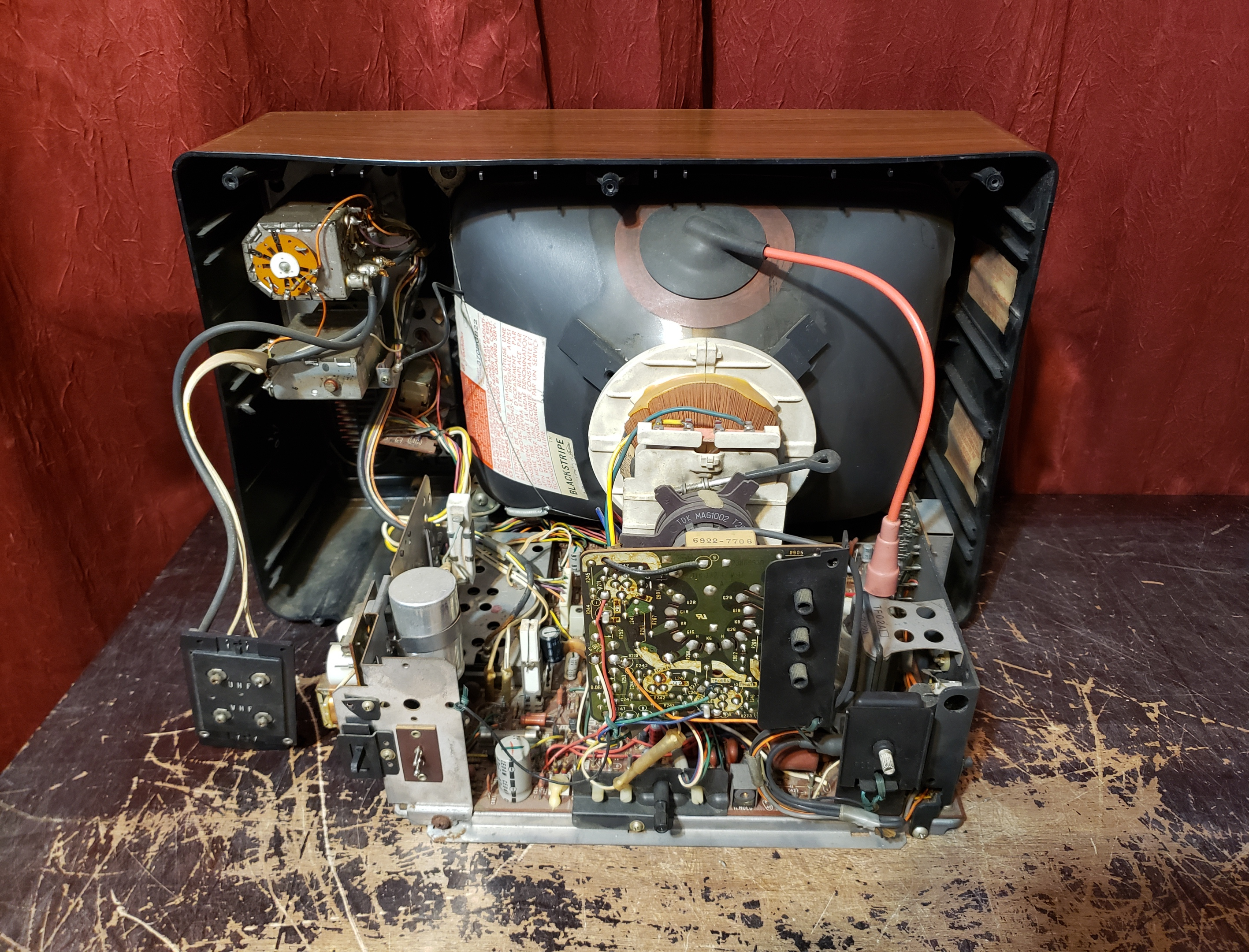
13" color TV by Toshiba, made in Japan in 1977.
Repair Notes
- Sound was barely audible on unit pictured. Sending 2.3VAC through the secondary winding of the audio output transformer resulted in a voltage drop of .25VAC suggesting a short. Resistance on the secondary was 1.2Ω, and 427Ω on the primary.
- Electrolytic C471 had high ESR.
This CRT is confirmed to be a hot chassis, possibly with very slow high voltage bleeding.
Hot Chassis means that "ground" on the chassis is tied to one side of the AC input from the wall, and touching it with your hand will complete a live circuit through your body to earth ground if the CRT is plugged into an AC outlet. The proper way to avoid this danger is to use an isolation transformer to isolate the CRT from earth ground and prevent electrocuting yourself.
Very slow high voltage bleeding means the picture tube itself retains a considerable amount of energy until manually discharged with an appropriate tool. Once discharged, remove the anode cap to prevent any static electricity recharging capacitors on the main board. There also may be stored energy on any capacitors near the flyback - look for 200v+ rated capacitors which are directly on the screen/G2 circuit and short them safely with a cheap set of discharge probes off Amazon. Repeat the same process for any large-diameter power supply filter capacitors to ensure the board is completely drained of energy.
Hot Chassis means that "ground" on the chassis is tied to one side of the AC input from the wall, and touching it with your hand will complete a live circuit through your body to earth ground if the CRT is plugged into an AC outlet. The proper way to avoid this danger is to use an isolation transformer to isolate the CRT from earth ground and prevent electrocuting yourself.
Very slow high voltage bleeding means the picture tube itself retains a considerable amount of energy until manually discharged with an appropriate tool. Once discharged, remove the anode cap to prevent any static electricity recharging capacitors on the main board. There also may be stored energy on any capacitors near the flyback - look for 200v+ rated capacitors which are directly on the screen/G2 circuit and short them safely with a cheap set of discharge probes off Amazon. Repeat the same process for any large-diameter power supply filter capacitors to ensure the board is completely drained of energy.
Gallery
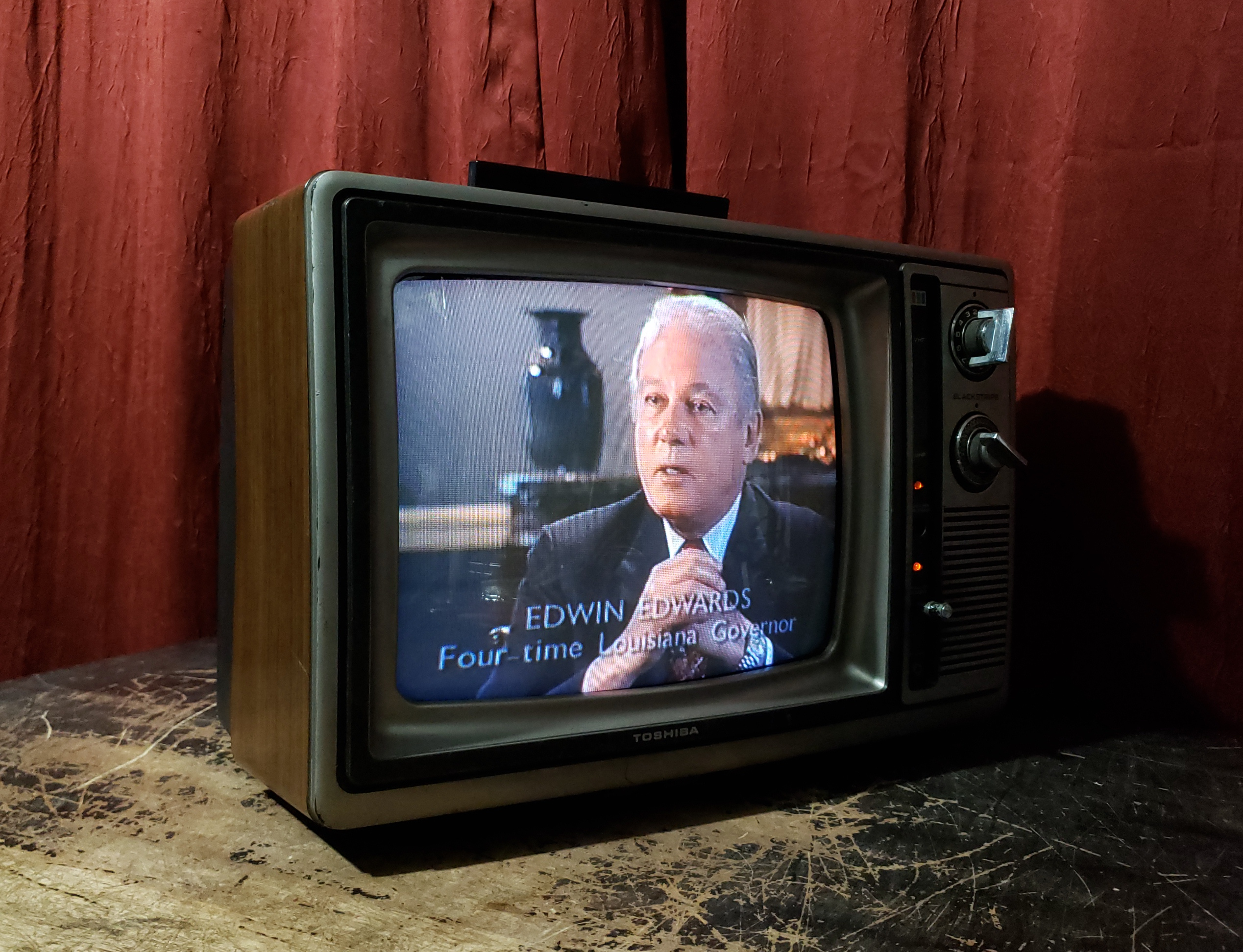
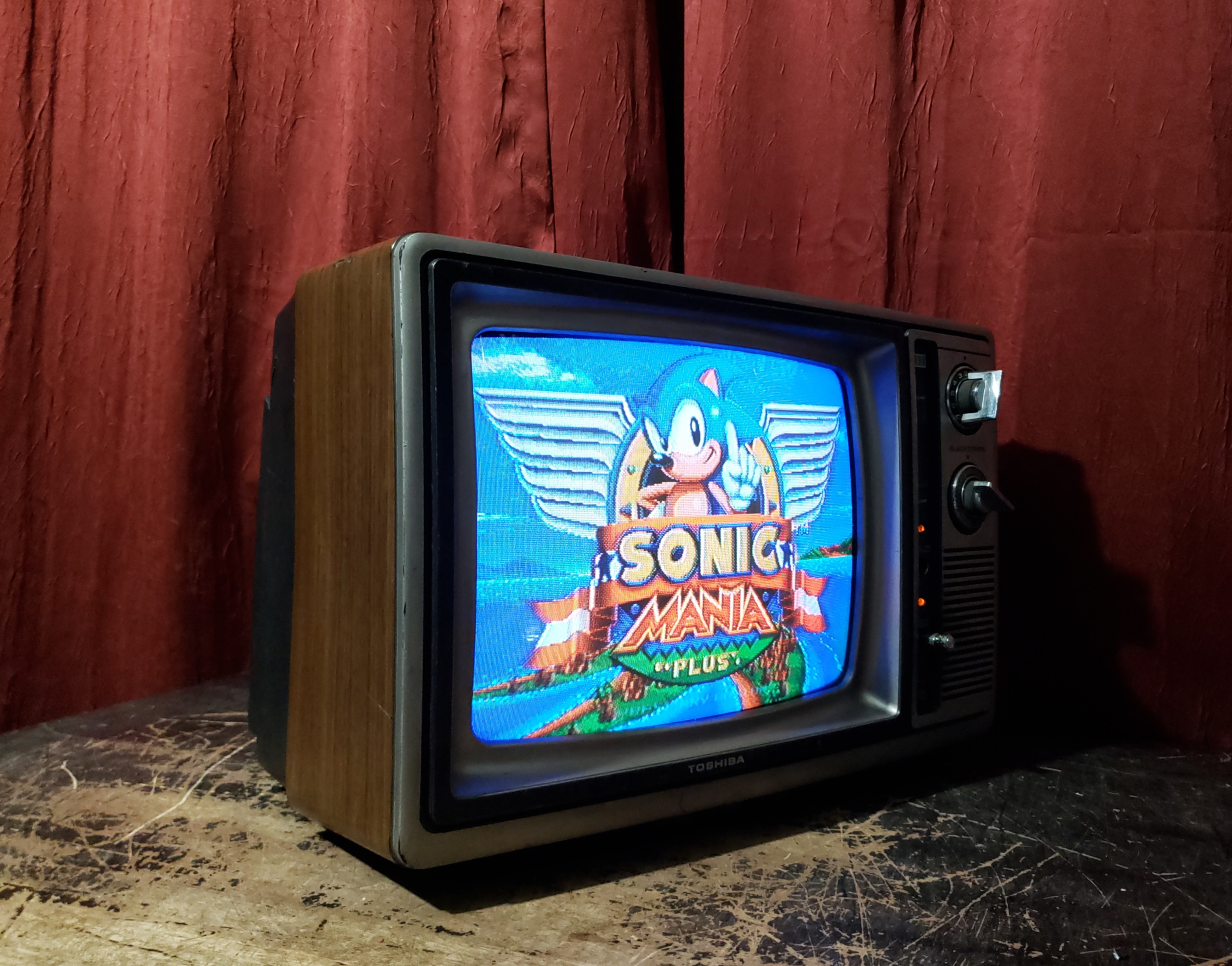
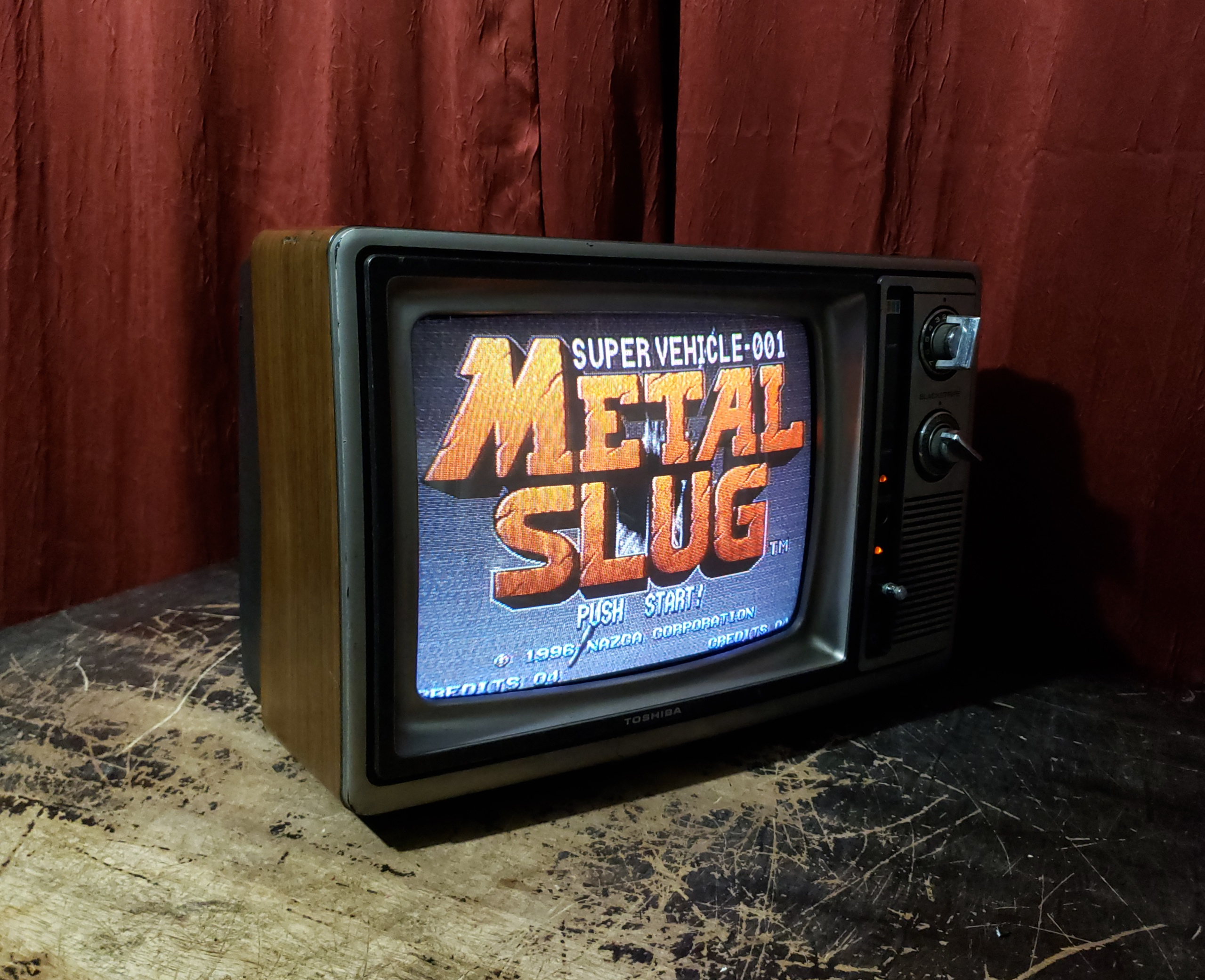
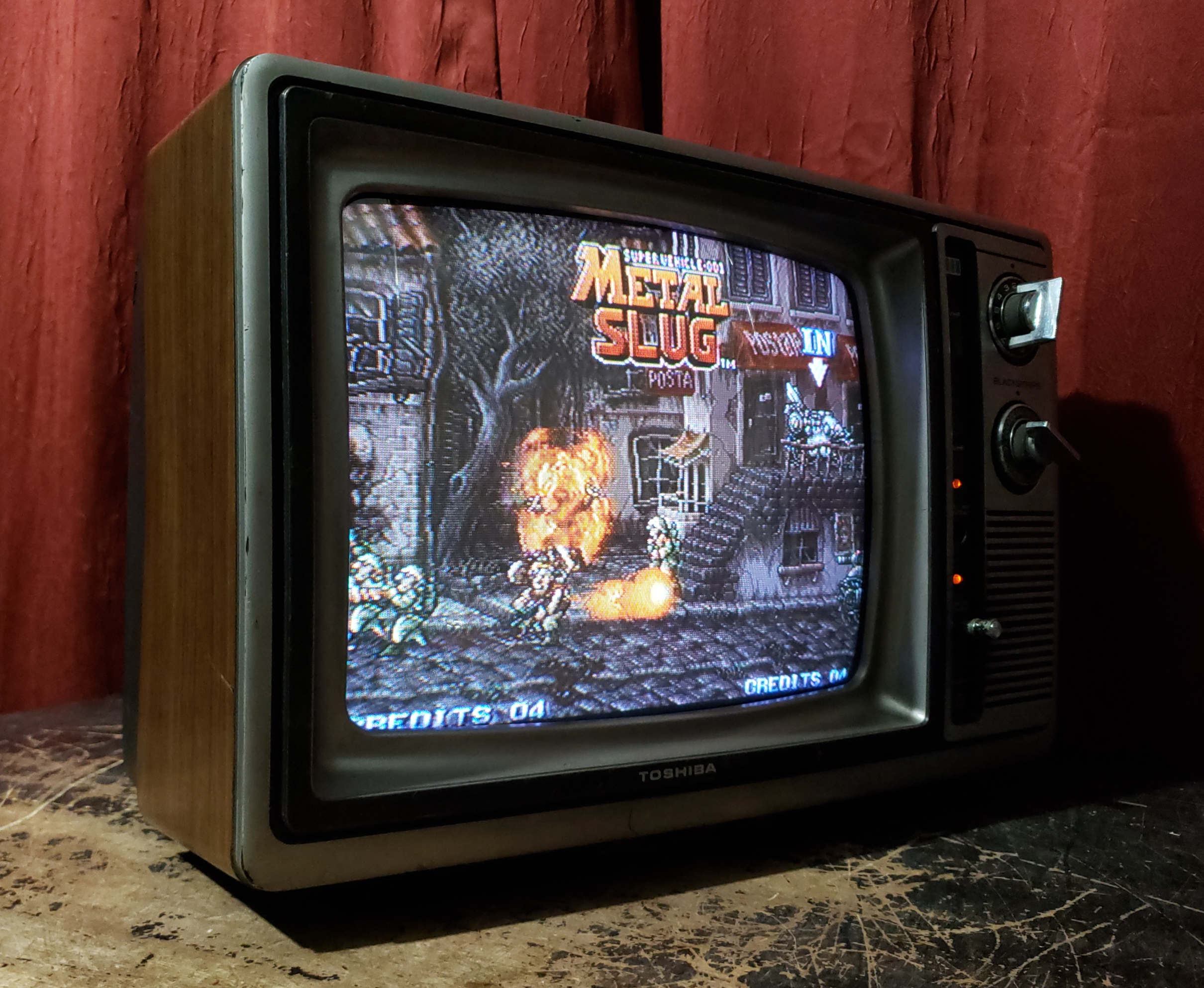
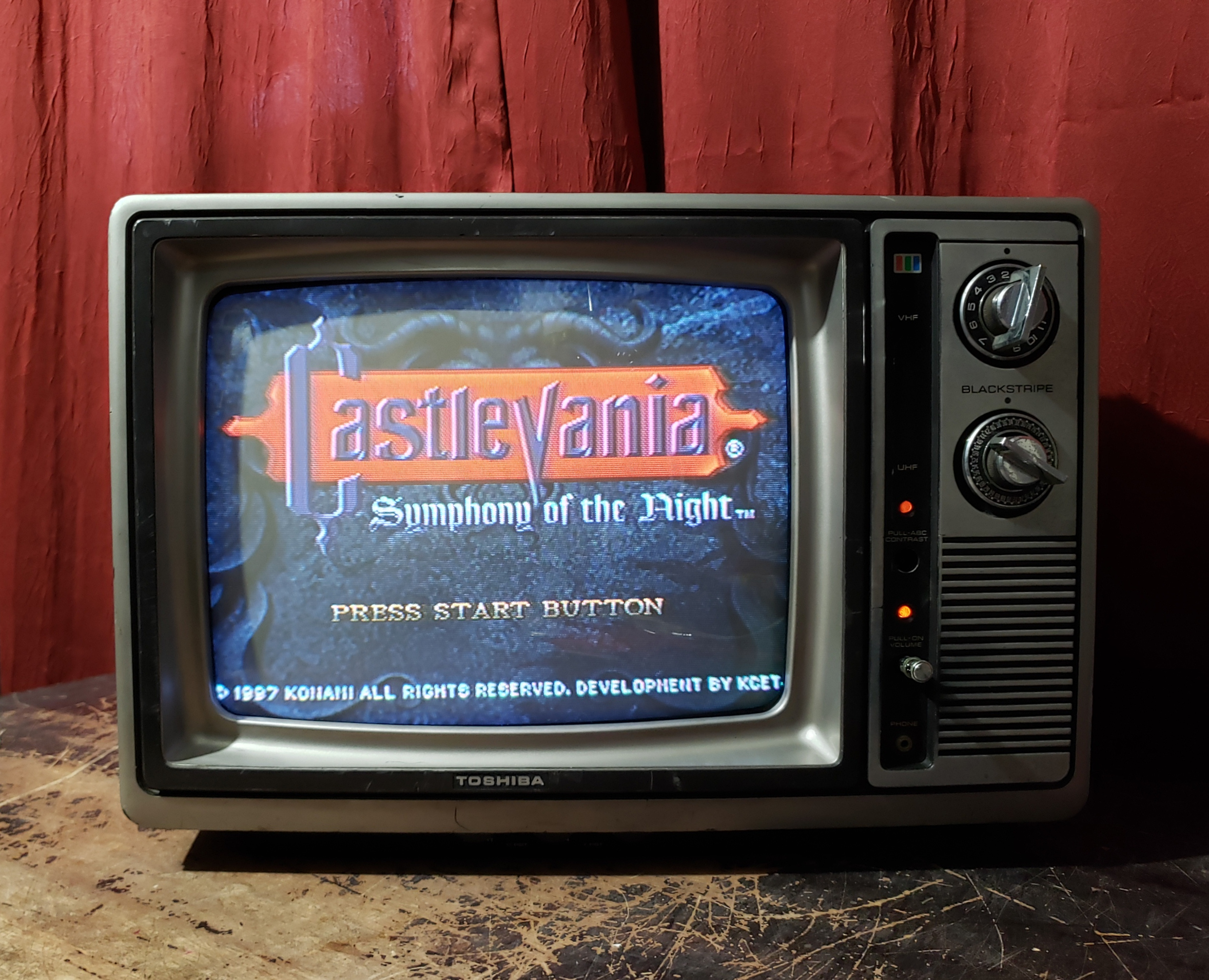
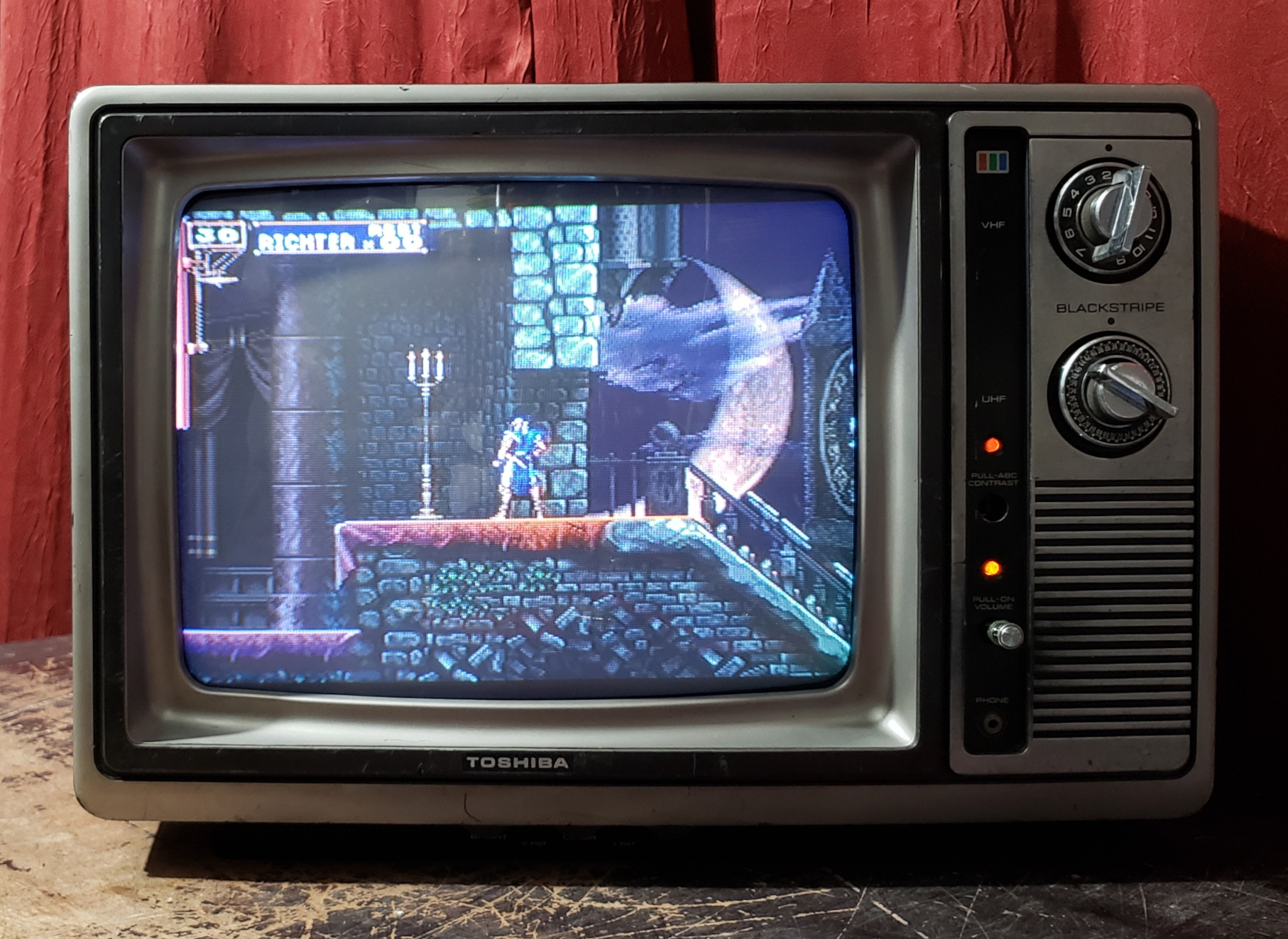
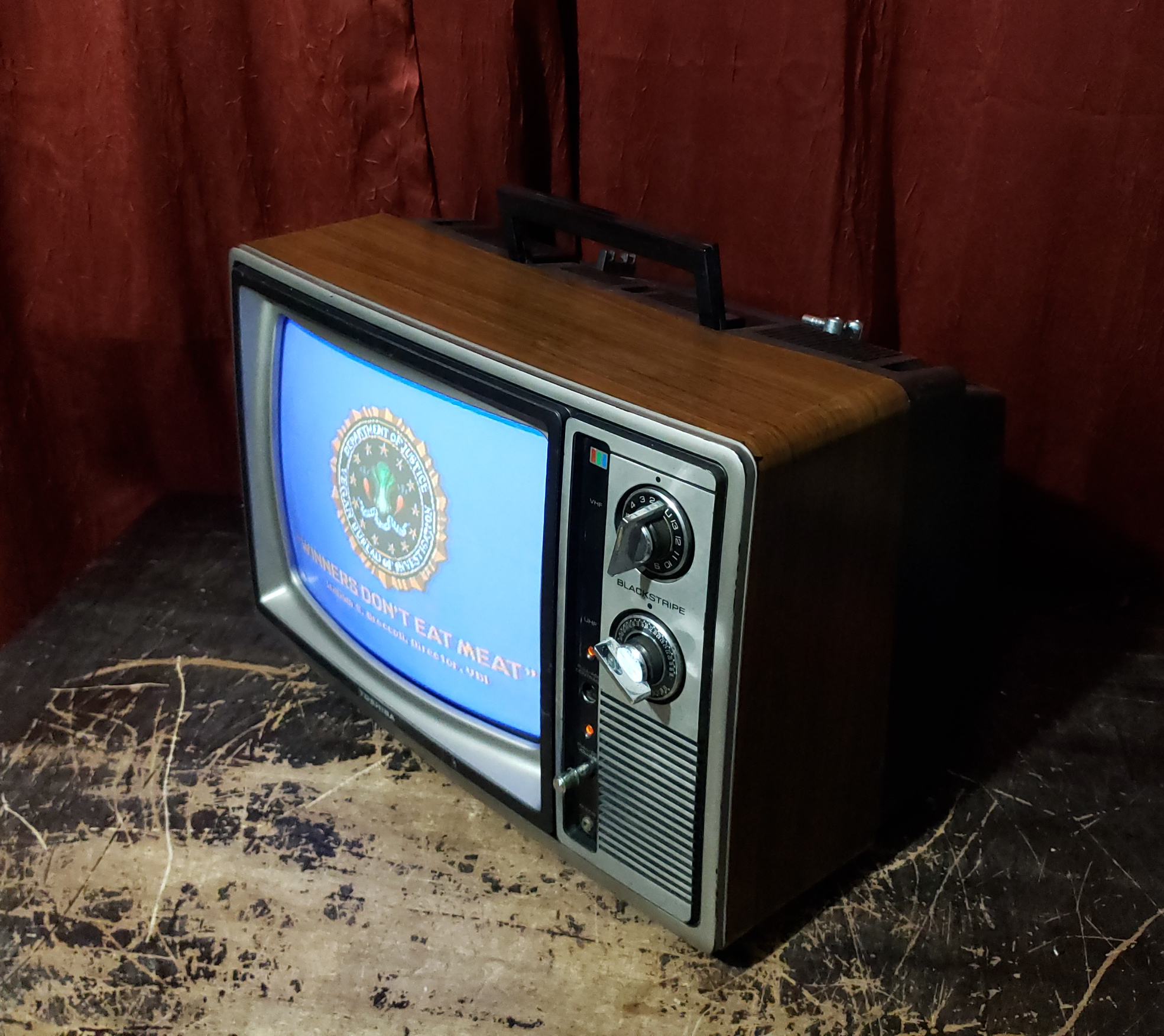
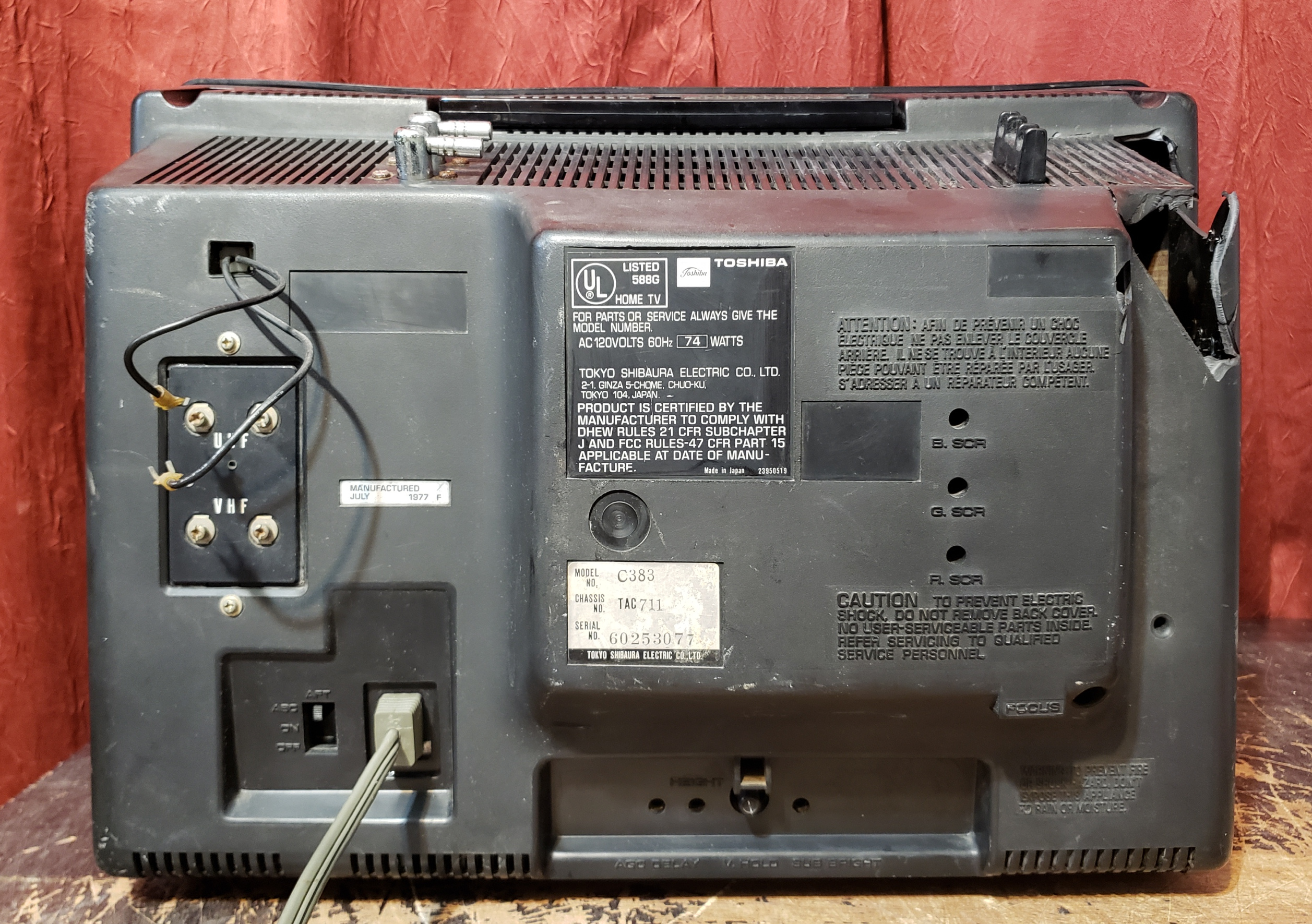
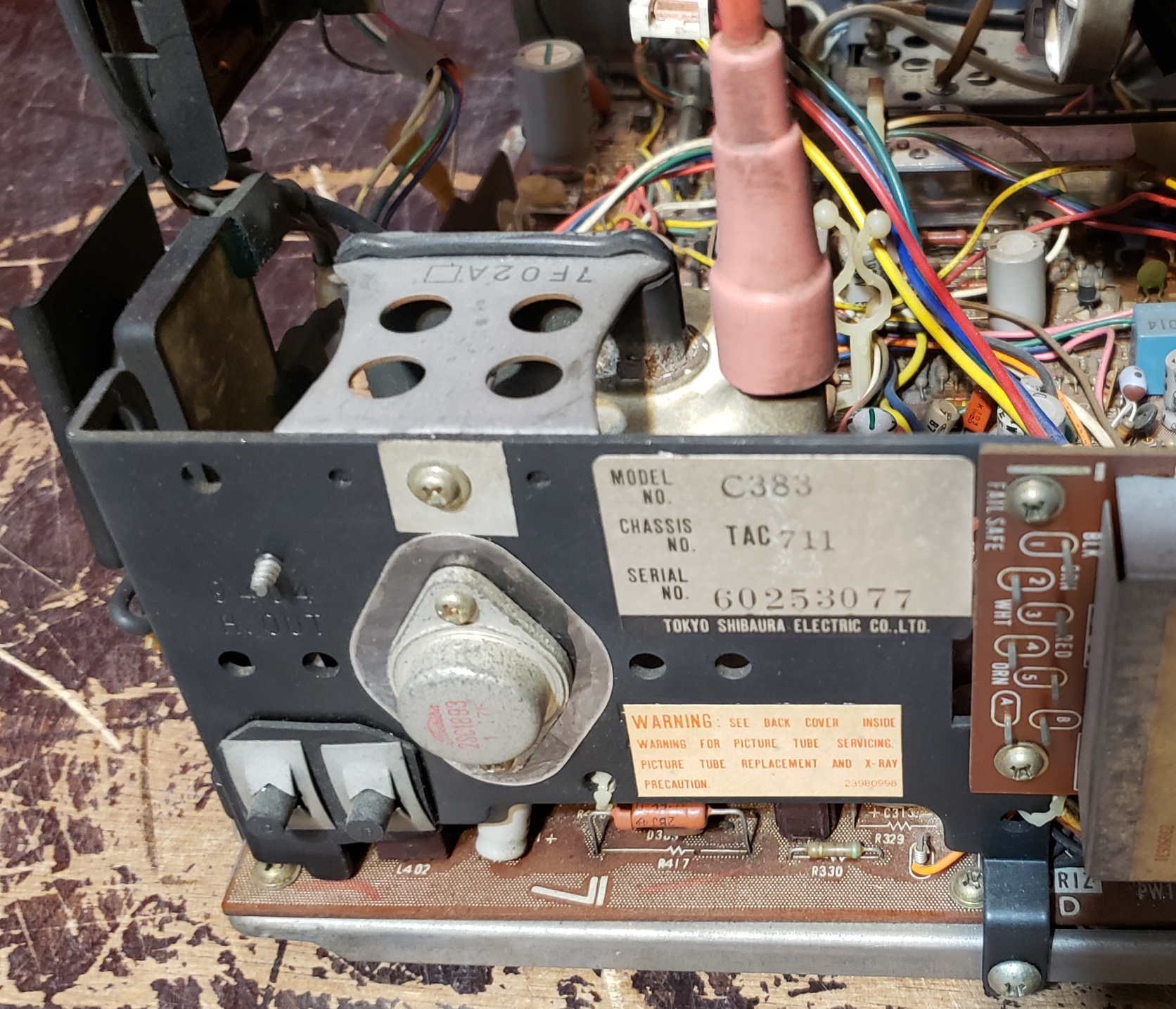
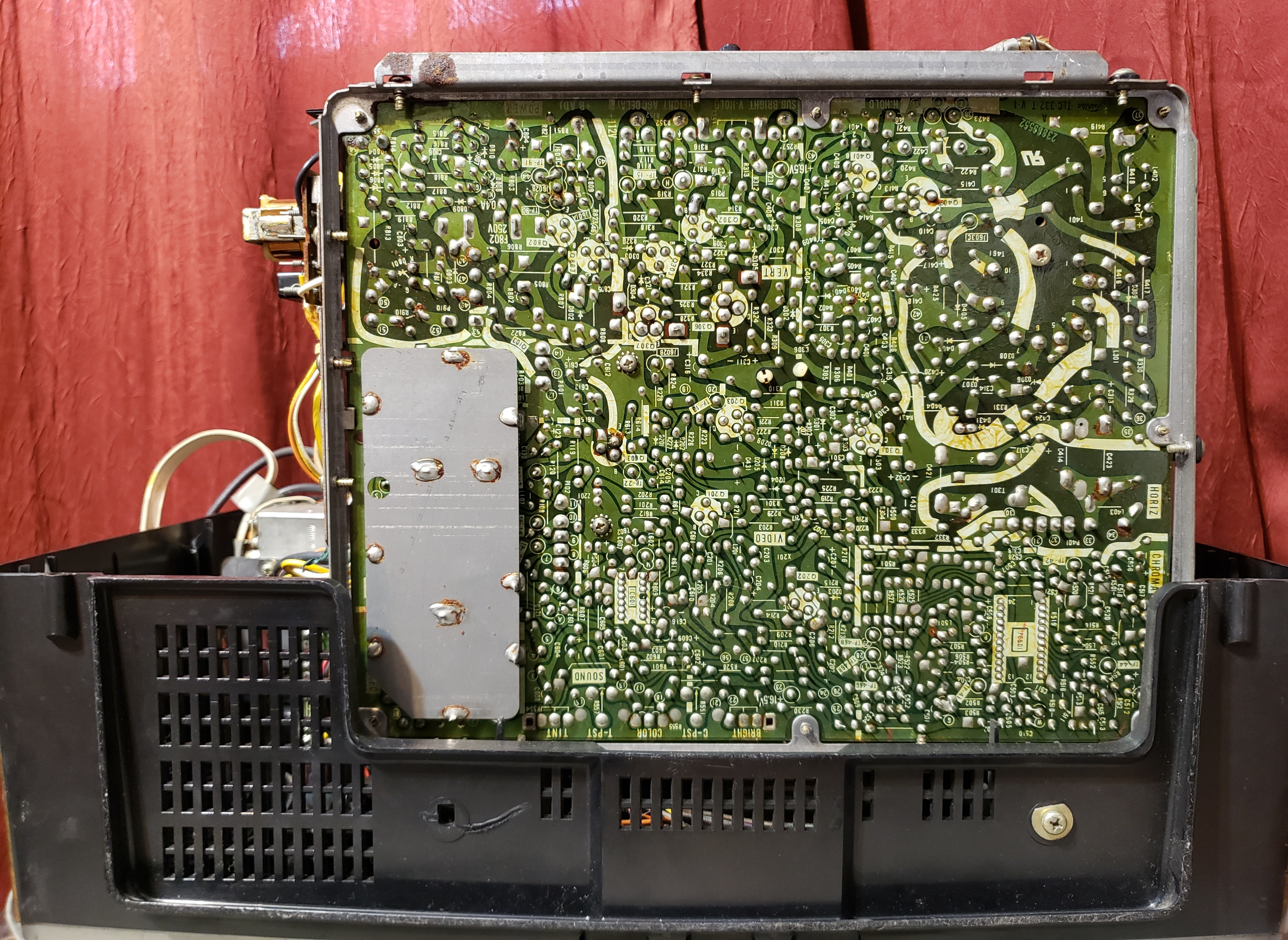
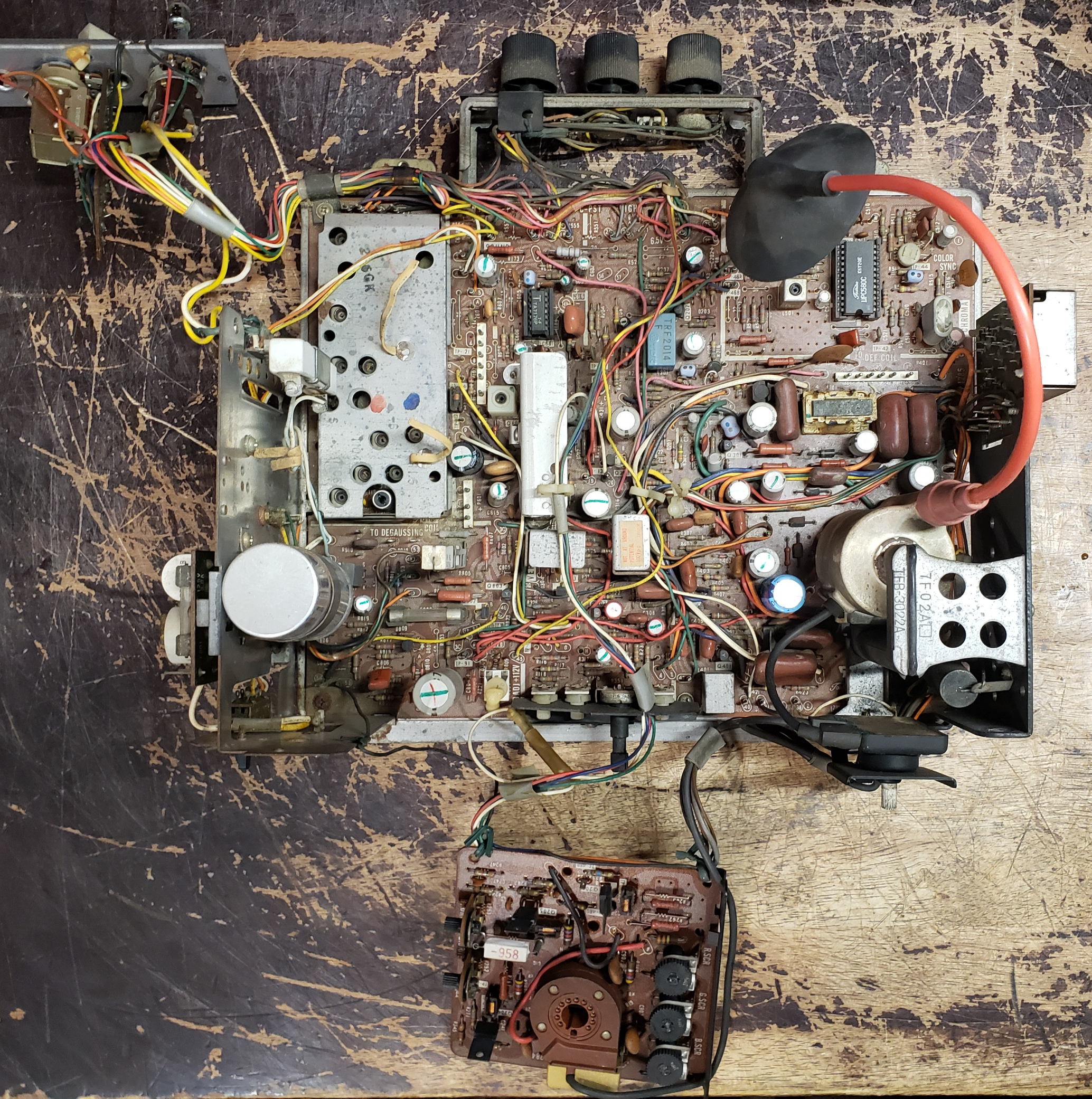
| Specifications | |
|---|---|
| Brand: | Toshiba |
| Manufacturer: | Toshiba |
| Model: | C383 |
| Series: | C |
| Viewable Size: | 13" |
| Input Signals: | RF |
| Native Resolutions: | 240p, 480i |
| Horizontal Scan Range: | 15 kHz |
| Vertical Scan Range: | 60 Hz |
| Formats: | NTSC |
| Aspect: | 4:3 |
| Adjustments: | Internal Potentiometers, External Potentiometers |
| Comb Filtering: | Notch |
| Jungle IC: | Toshiba, μPC580C |
| Focus Type: | Single |
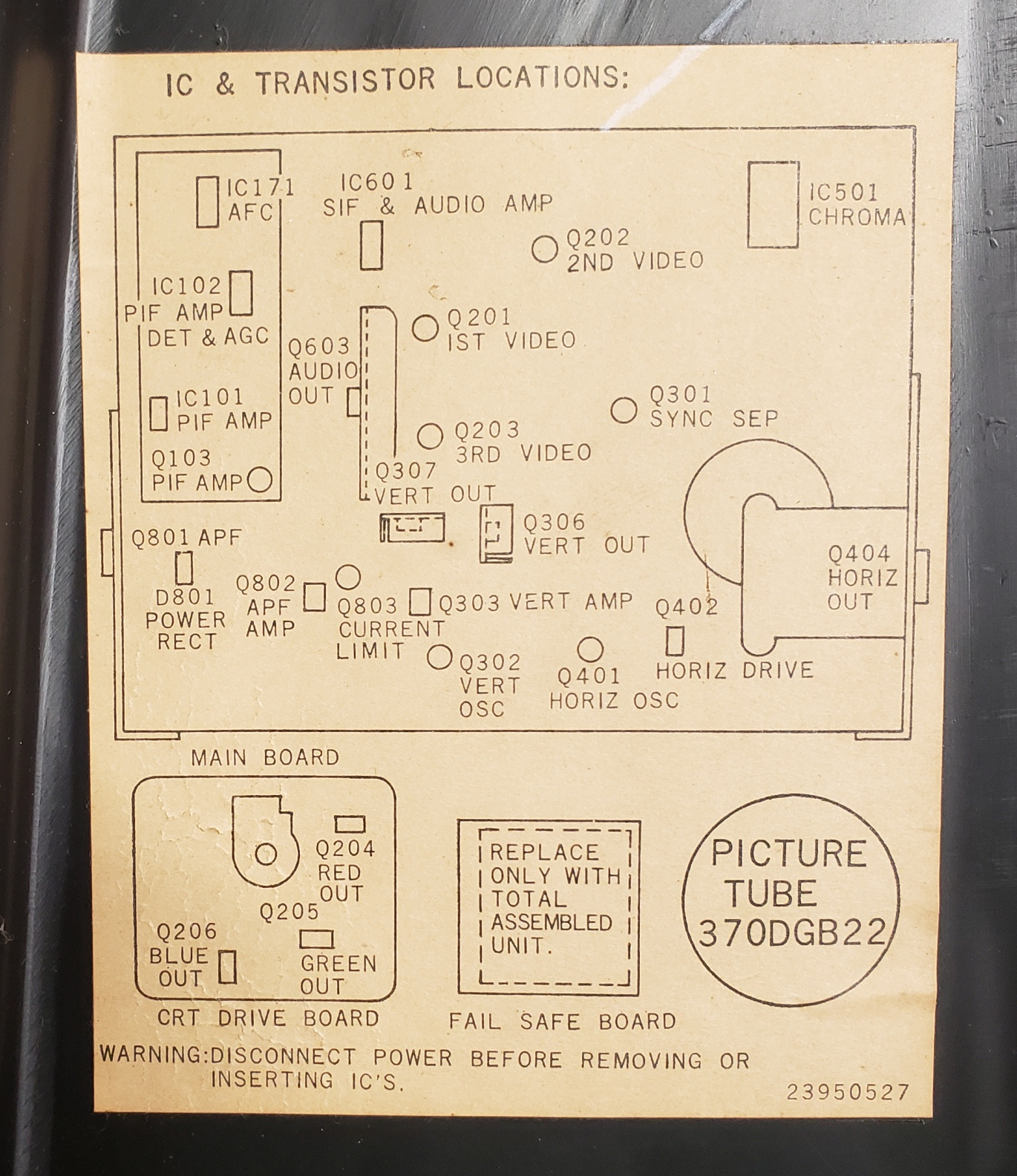
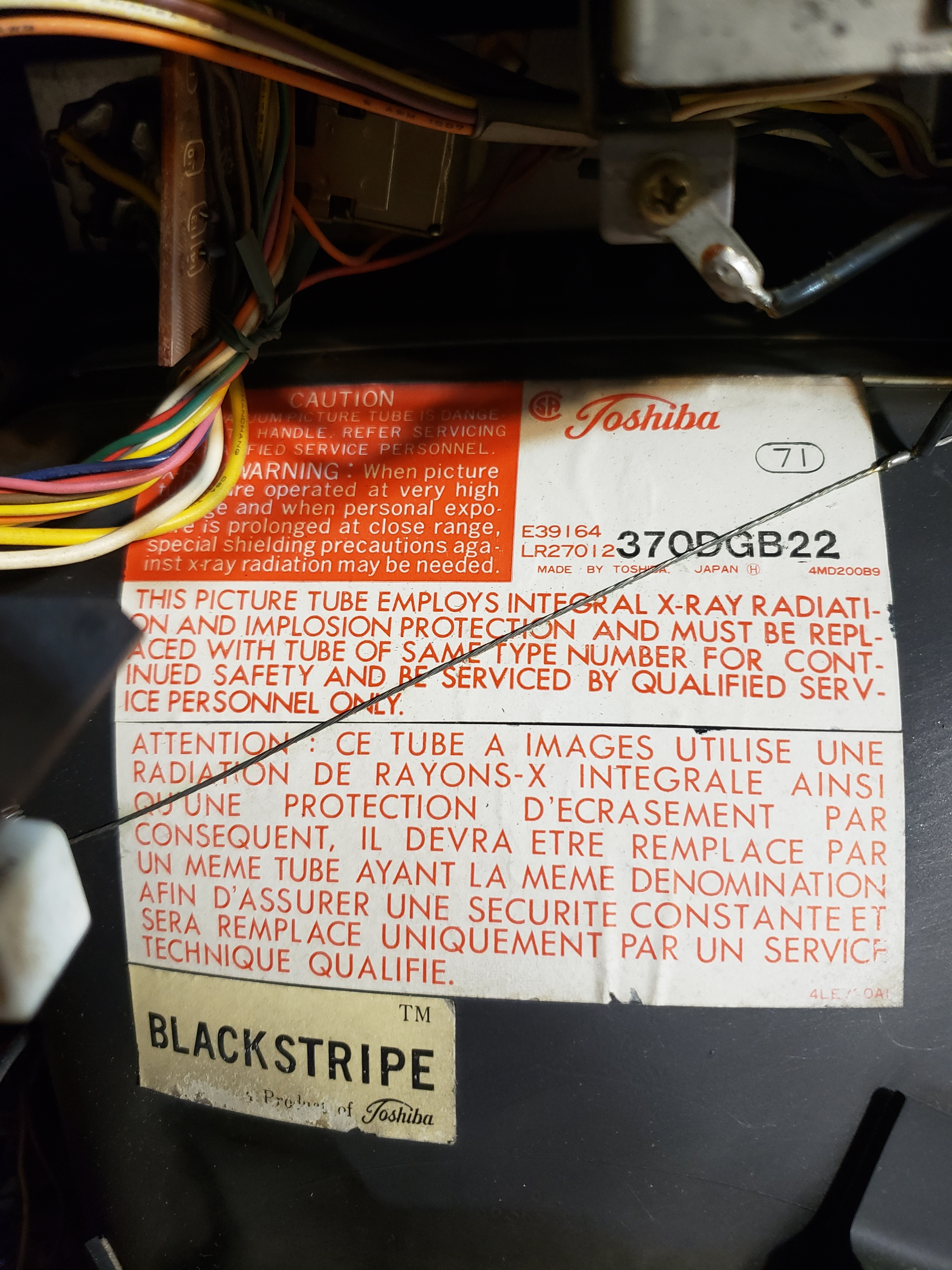
| Tube: | Toshiba , Blackstripe , 370DGB22 |
| Heater Voltage: | 6.3v |
| Deflection: | 90° |
| Mask: |
Slot

|
| Tint: | Light |
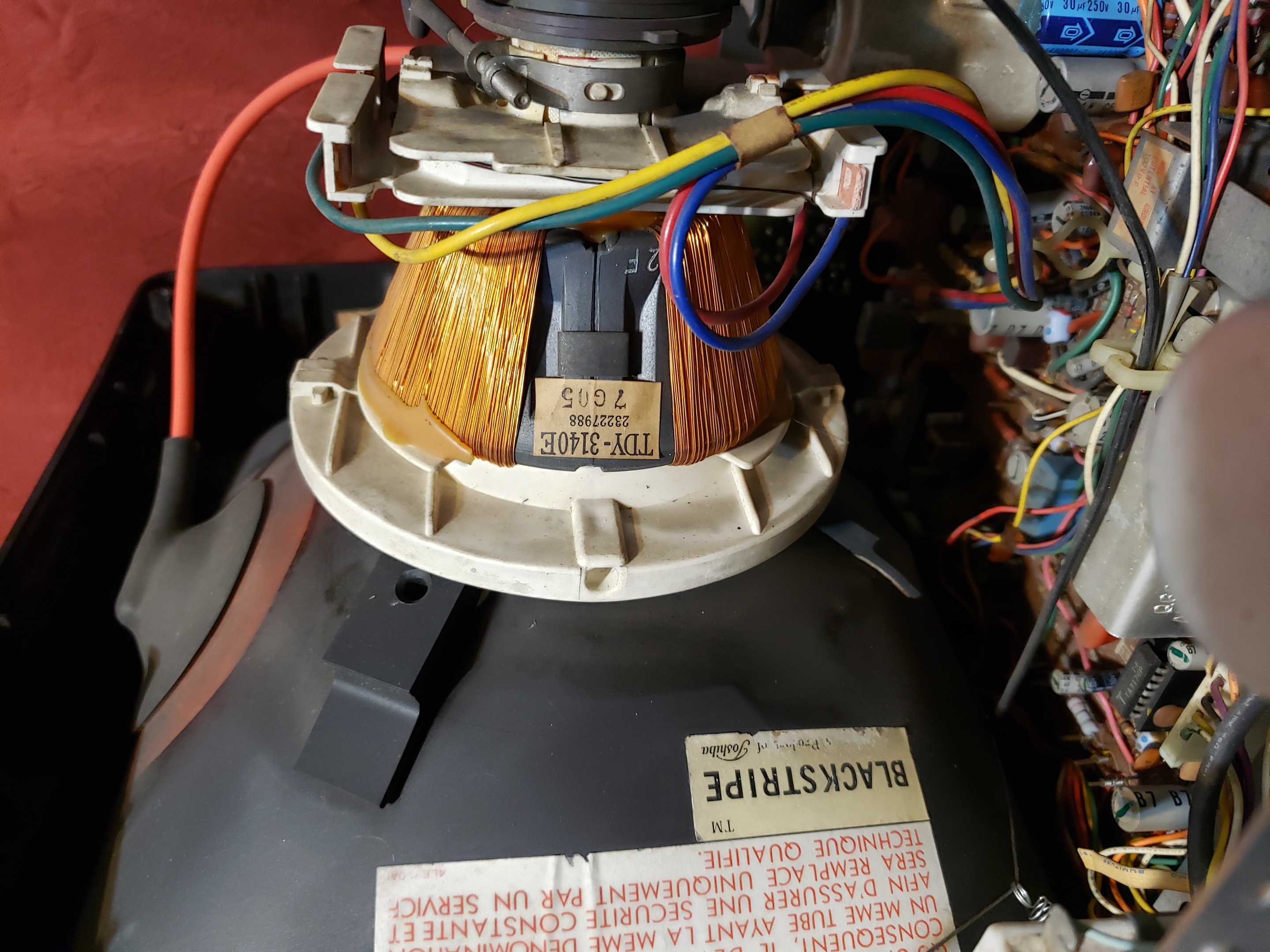
| Yoke: | TDY-3140E |
| Yoke Horz. Resistance: | 2.2 ohm |
| Yoke Vert. Resistance: | 48.9 ohm |
| Speakers: | Mono |
| Chassis: | TAC711 |
| Application: | Consumer |
| Cabinet Material: | Plastic, Simulated Woodgrain |
| Launched: | 1977 |
| Country of Manufacture: | USA |
| Market: | North America |
| Power Standard: | 120v |
| Mounting: | Table Surface (Standard), Carrying Handle |
| Degaussing: | Automatic on Power-on |
| Tag: | Needs Owners Manual, Needs Service Manual, Needs Measurements, Repair Log |
 This work is licensed under a