Summary
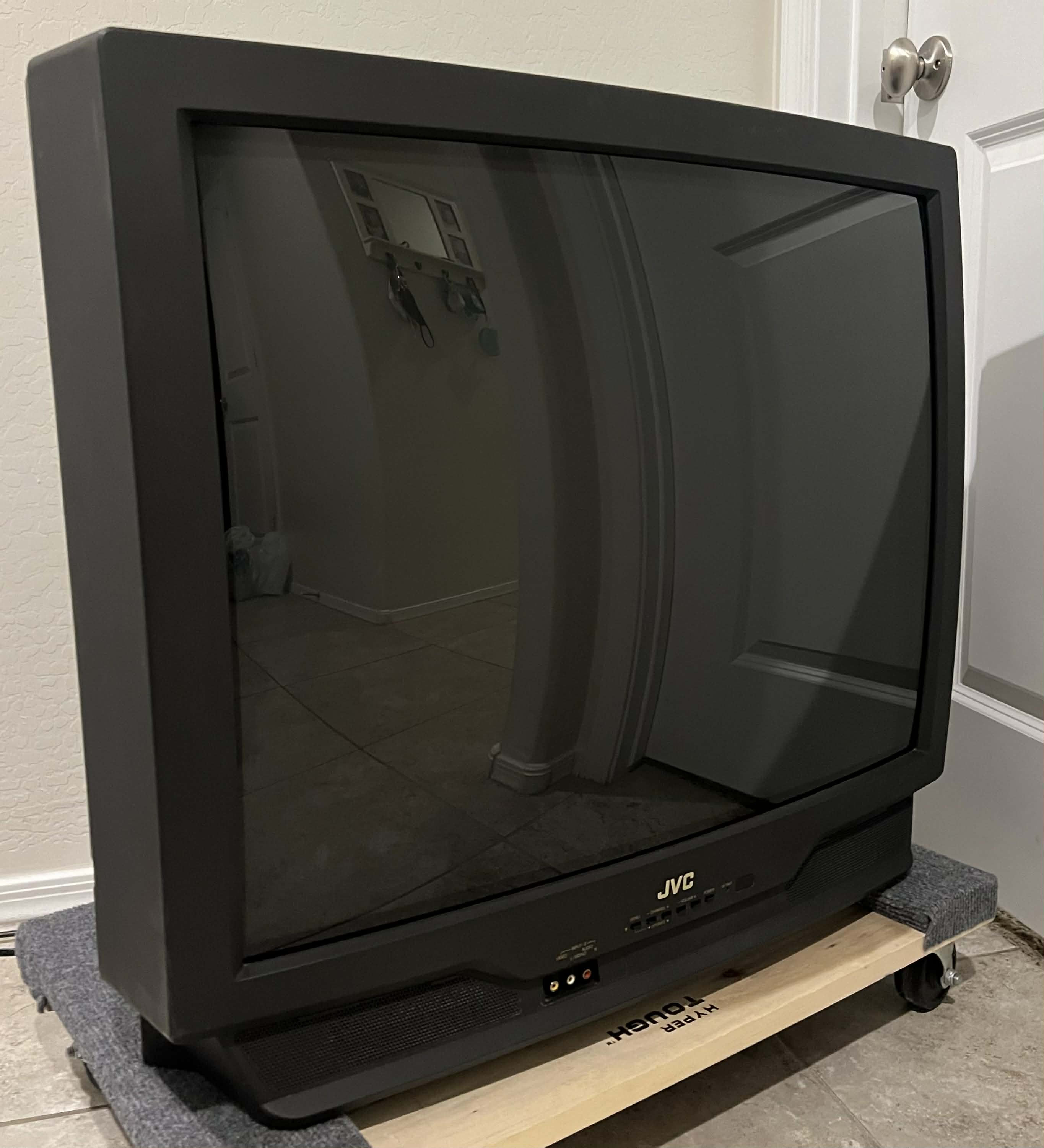
32" curved-screen CRT by JVC, made i Mexico in 2001. Has RF, composite, s-video and component inputs with stereo sound. Uses the same parts as the D-Series but in a different case design.
(Special thanks to Tim Rupp for the pics!)
Manuals
Promo Materials
Notes
This set uses what I'd like to call the "middle-era" chassis from 2001, which use the same chassis and tubes as the AV-xxDx02 models.
There are three tubes this model can use: an LG (G), Panasonic (M), or Hitachi (H). (The pics you see below are of the Hitachi tube.)
This set has red push that can be turned off in the service menu with the following settings when in the STANDARD video preset:
For RF, composite and s-video, turn off "R Y GAIN" and "CD MAT." Then for component, turn off "CMP R Y GAIN" and "CMP CD MAT." This should dial back the over-saturated reds quite a bit.
This set even has a special feature in the service menu called "V 48HZ" to enable 48hz interlaced video! Originally intended for the film industry, this setting can be used for it to sync to 50hz content! Amazing stuff.
This TV can be modded for RGB.
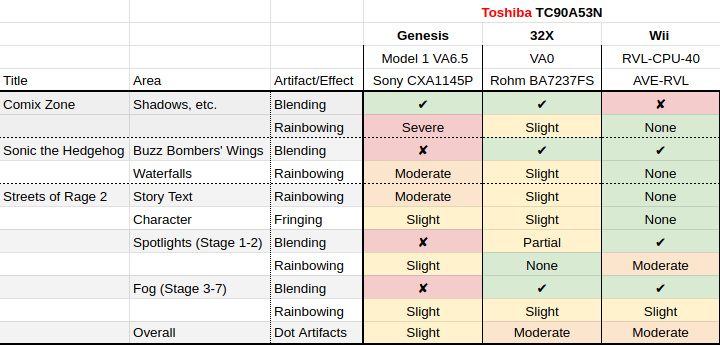
Composite 240p Performance, Disabling Vertical Edge Enhancement
by Eli Krause
I. For composite decoding this set uses a Toshiba TC90A53N, a 3-line digital comb filter. One beneficial feature of this comb filter is its "1-line color dot interference reducer circuit". Depending on the console/revision, dot artifacting ranges from slight to moderate, and blending effects may be broken. Using an external notch filter to decode composite instead and sending that to the s-video or component input would blend all dithering patterns and remove nearly all dot artifacts (guide here).
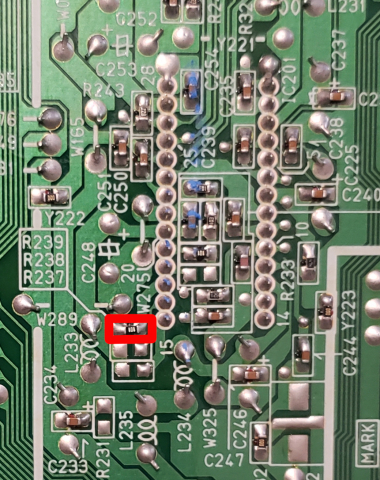
II. Vertical edge enhancement artificially alters the color/intensity of scanlines at vertical edge transitions for composite and RF sources, to where it visibly no longer matches the original presentation. To reduce this effect to its minimum, the high signal sent to pin 17 of the comb filter must be brought low which can be achieved by removing the resistor leading to that pin.
- JVC AV-20D202 & AV-27D302: R239 on the bottom of the main board
- JVC AV-32D502 & AV-32D302: R247
- Hitachi 32UX01S: RX67
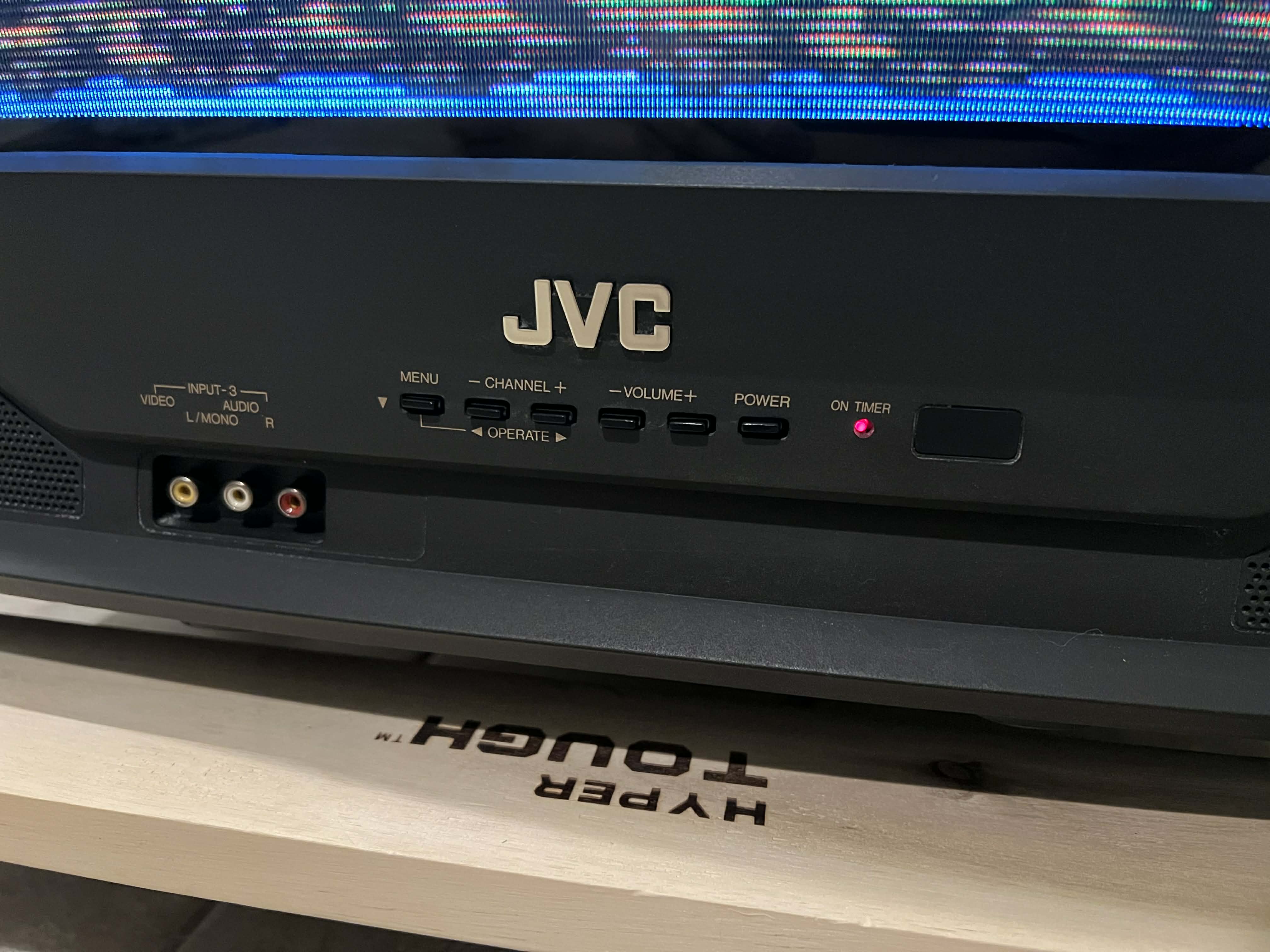
Gallery

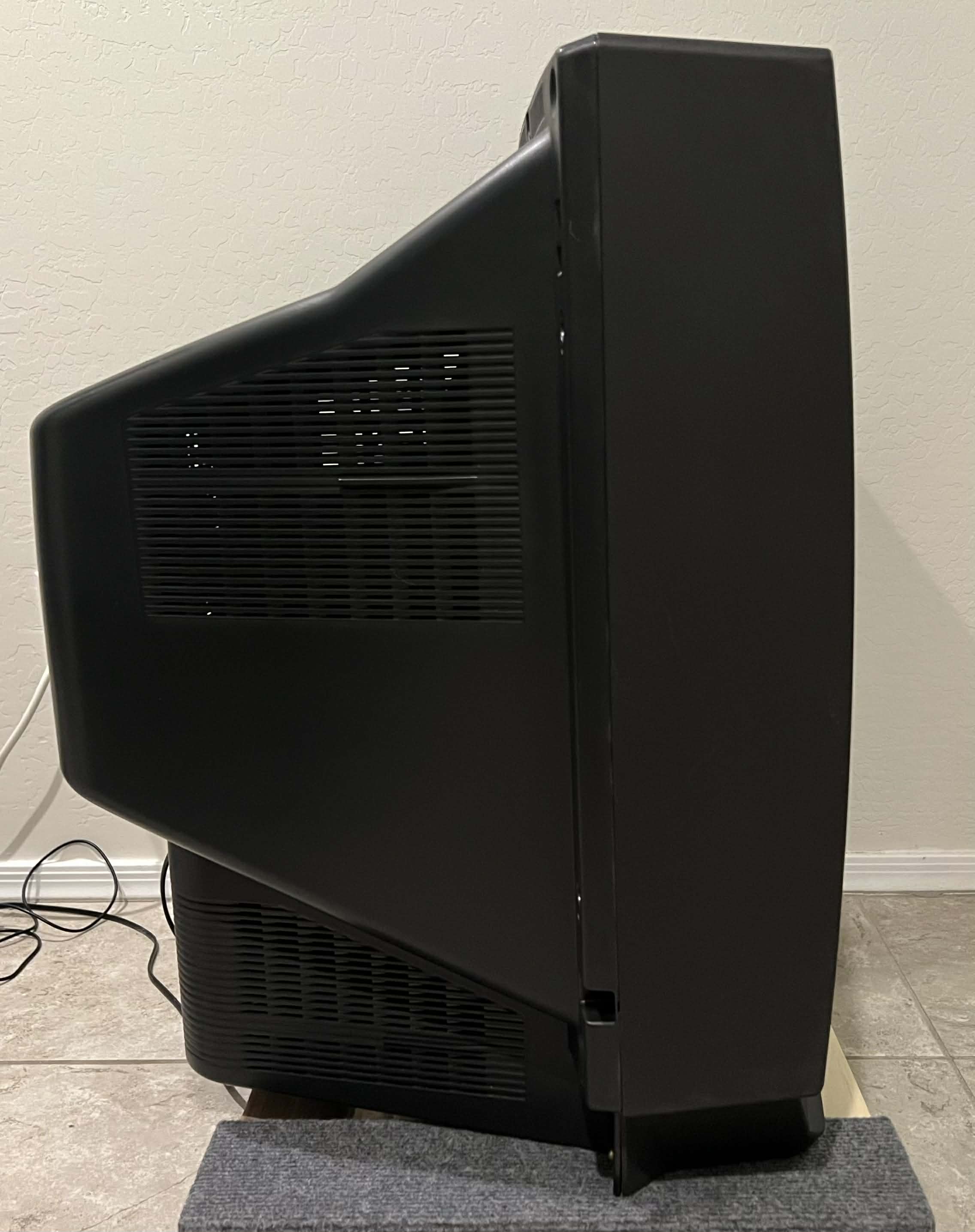
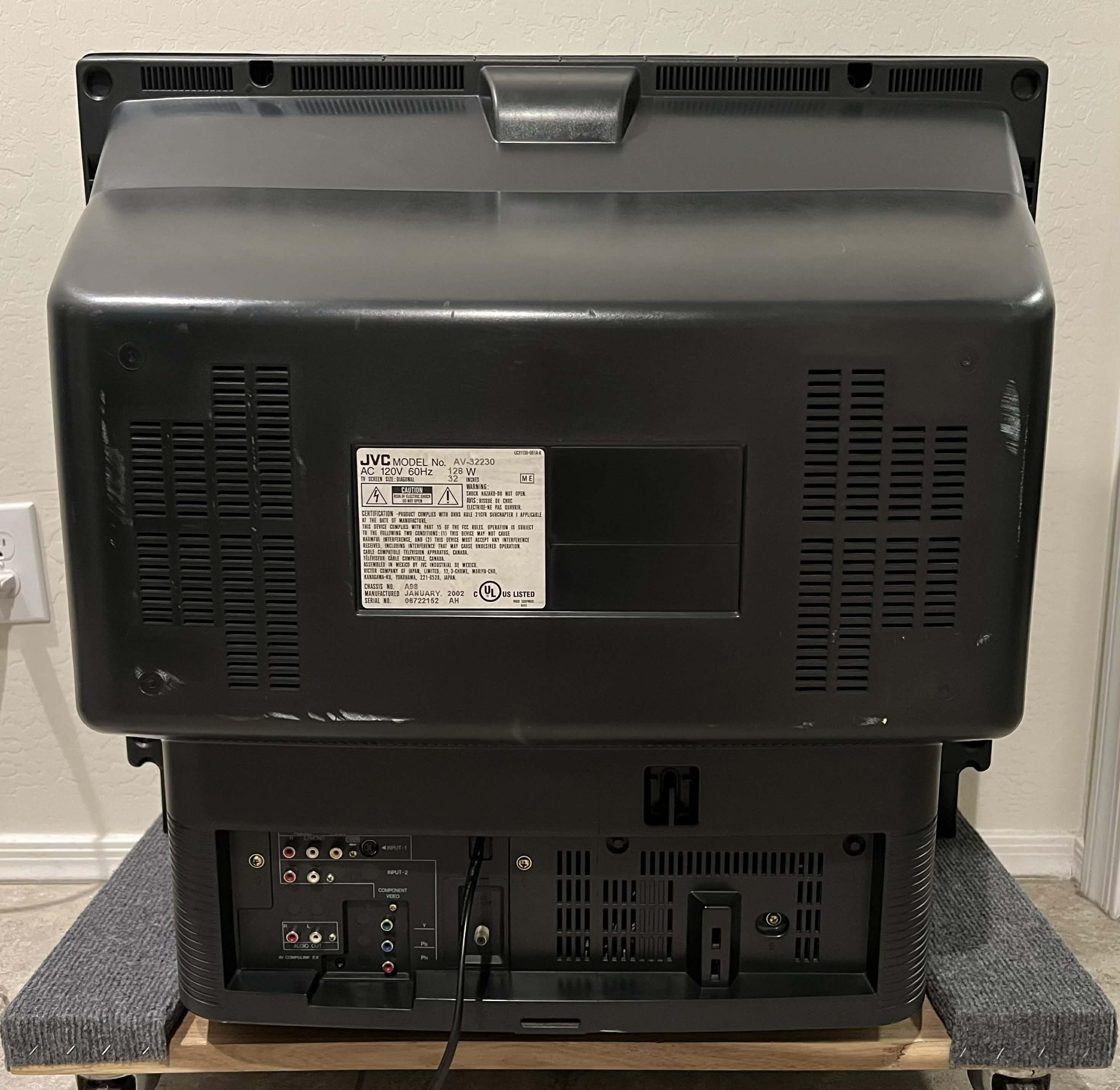
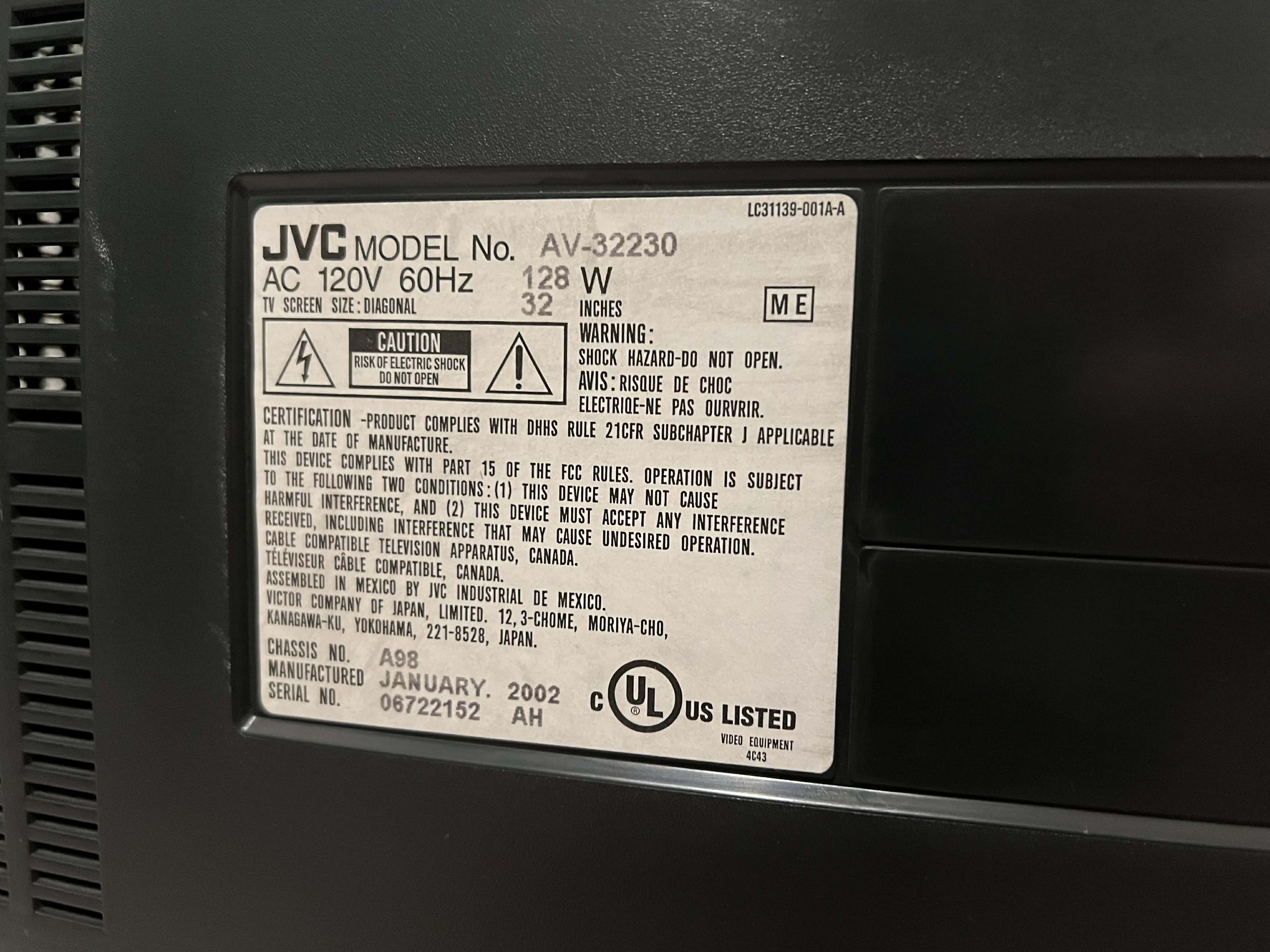
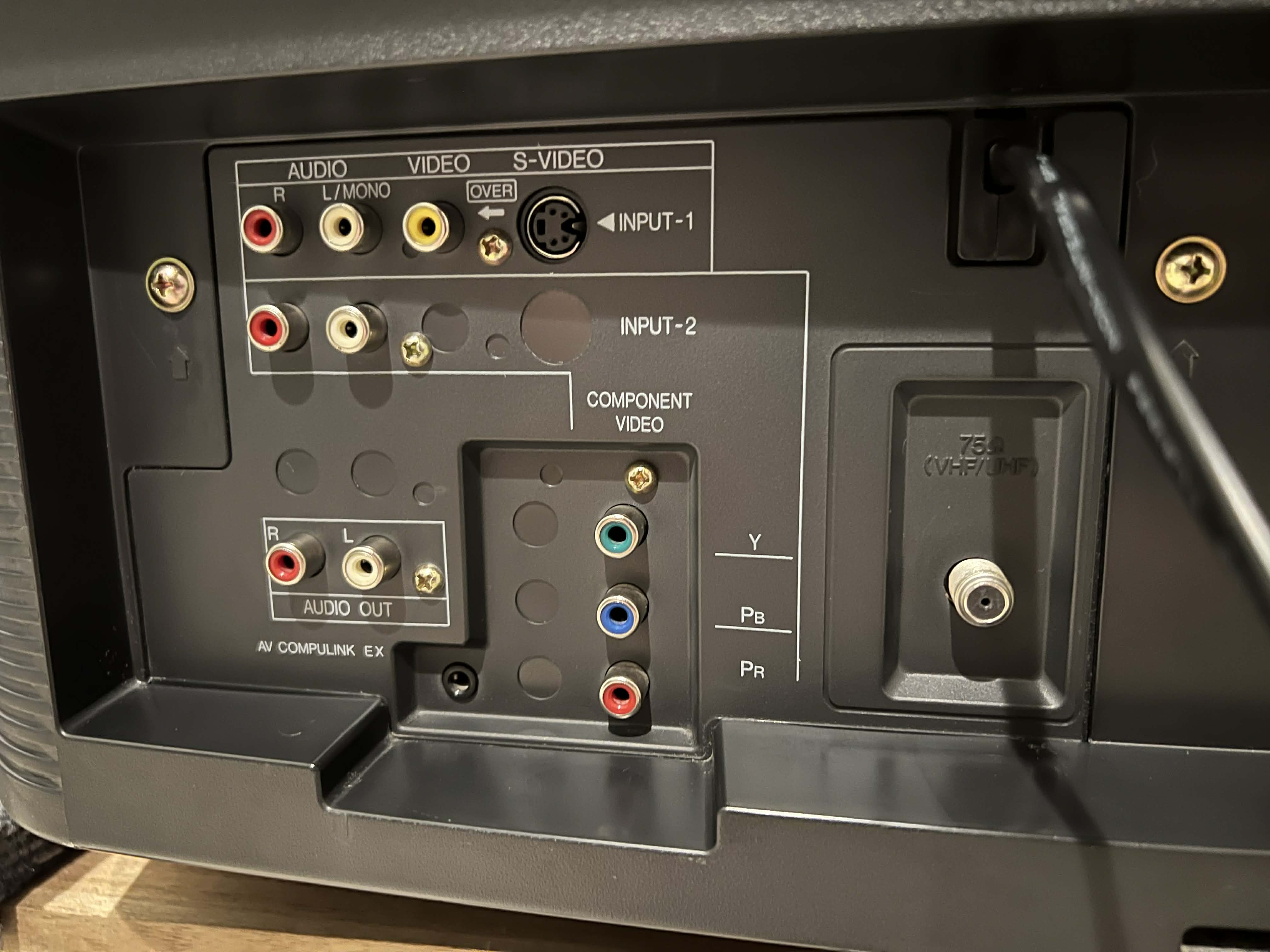
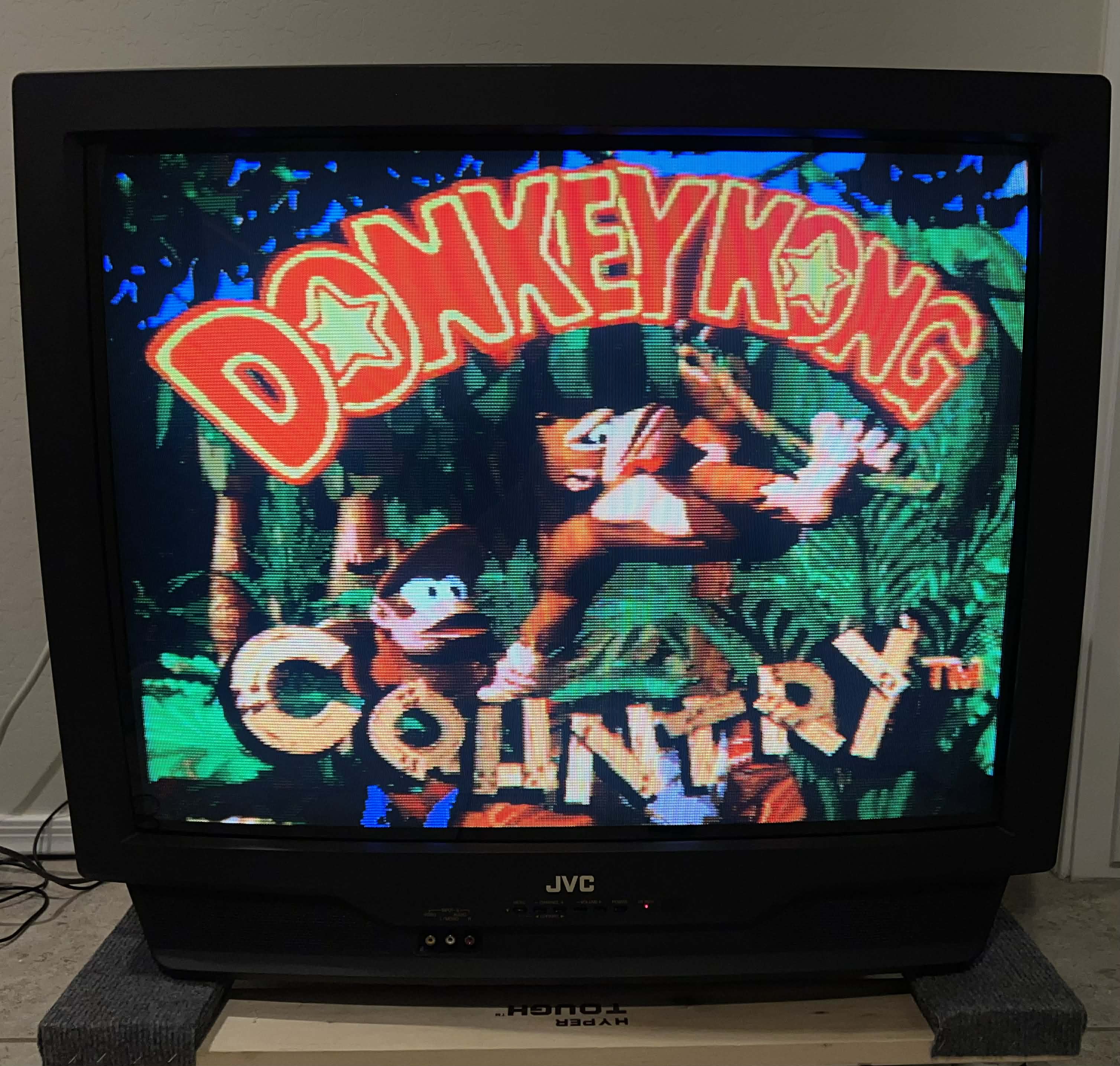
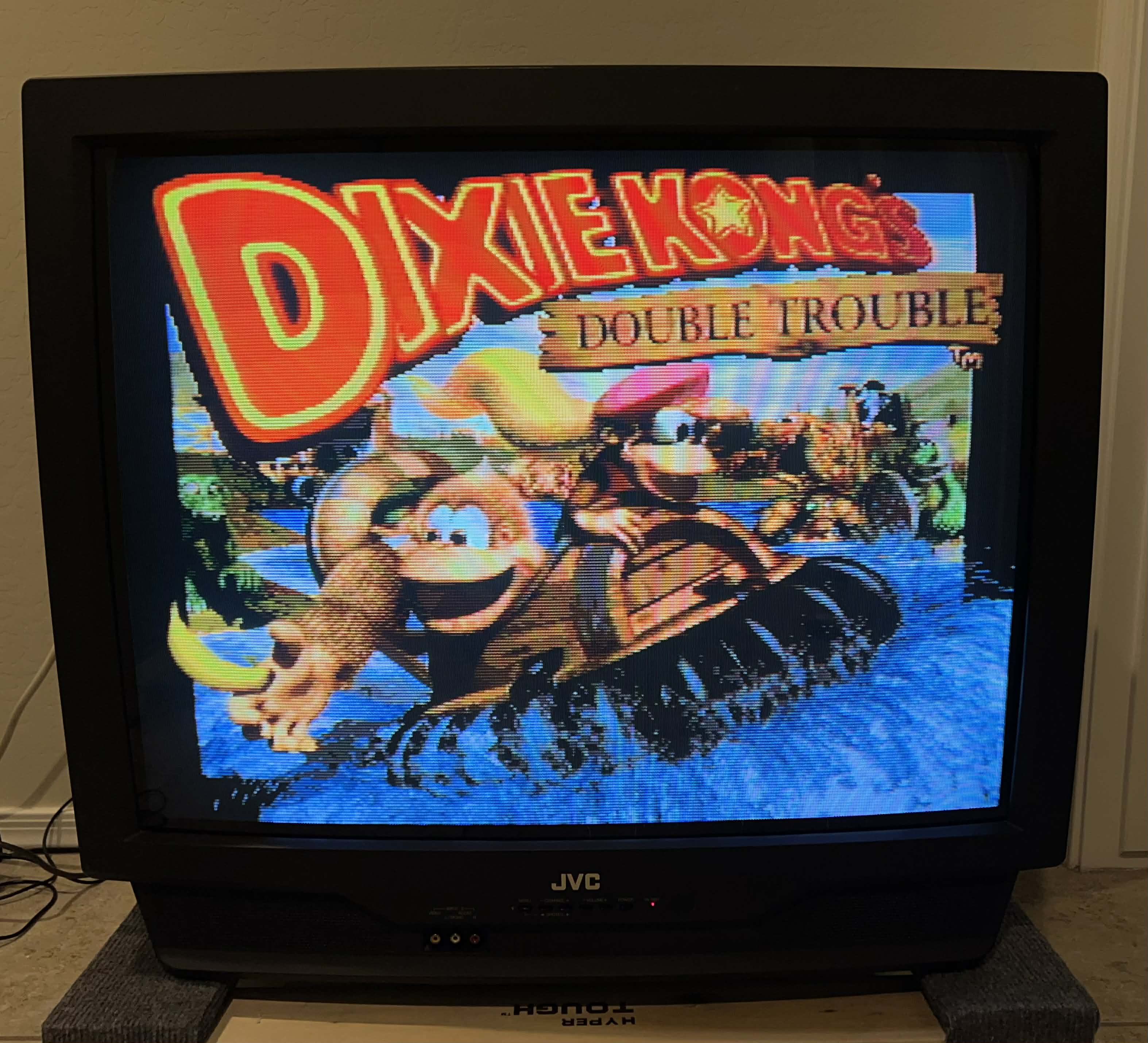
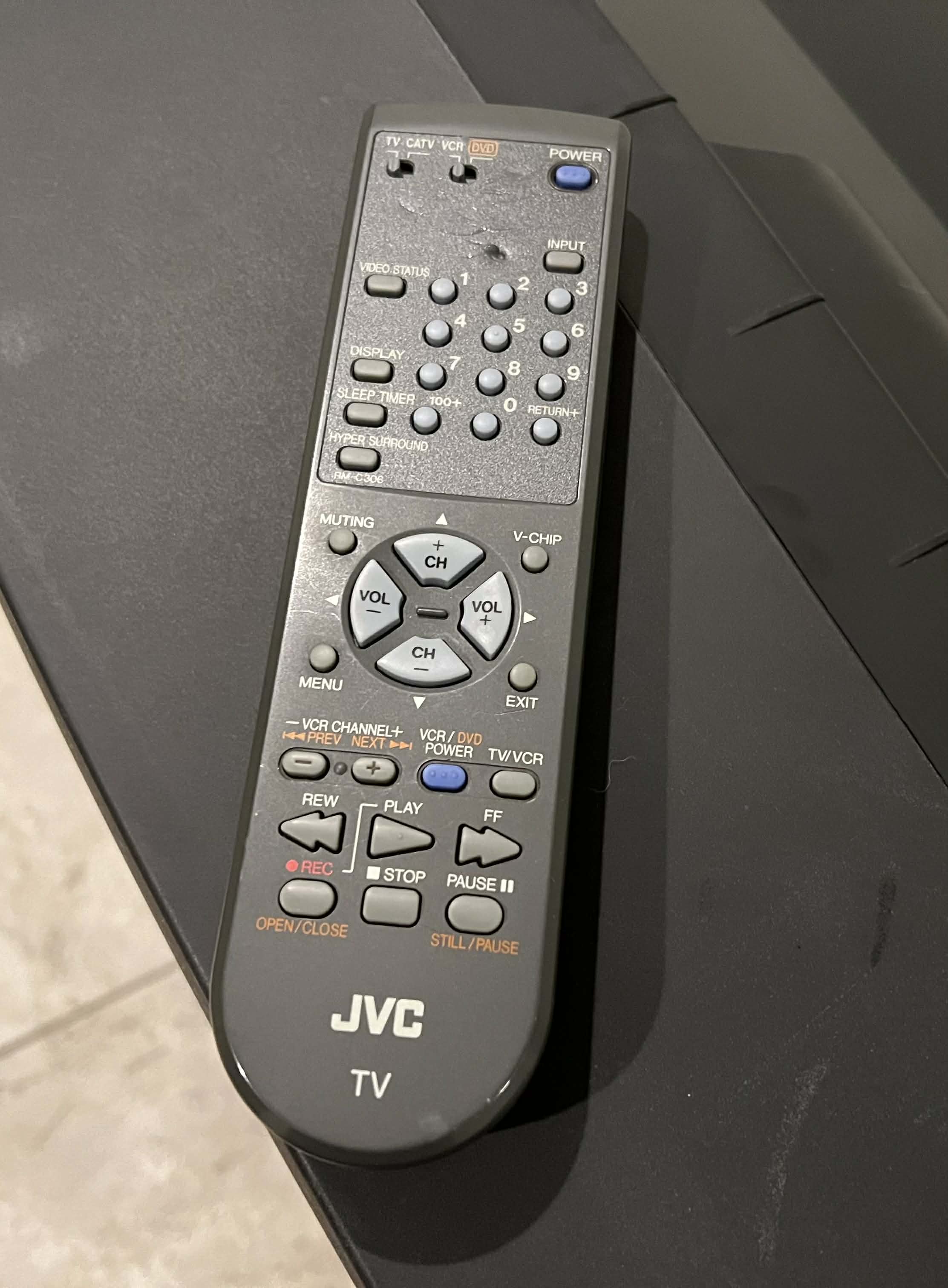
| Specifications | |
|---|---|
| Brand: | JVC |
| Manufacturer: | JVC |
| Model: | AV-32230 |
| Series: | AV |
| Viewable Size: | 32" |
| Input Signals: | Composite, S-Video, RF, Component YPbPr |
| Native Resolutions: | 240p, 480i |
| Horizontal Scan Range: | 15 kHz |
| Vertical Scan Range: | 60 Hz |
| Formats: | NTSC |
| Aspect: | 4:3 |
| Adjustments: | OSD Customer Controls, OSD Service Menu |
| Comb Filter IC: | Toshiba, TC90A53N |
| Comb Filtering: | 3-Line Digital |
| Jungle IC: | Toshiba, TB1253AN, TB1253 |
| Flyback: | QQH0092-001 |
| Focus Type: | Single |
| Tube: | Panasonic , Hitachi , A80LJF30X , LG , A80QCF240X , M80JUA061X , A80LJF30X08 , A80QCF240X14L , M80JUA061X06 |
| Heater Voltage: | 6.3v |
| Mask: |
Slot

|
| Tint: | Dark |
| Removable Glare Film: | No |
| Speakers: | Stereo, 3W x 2 |
| Remote: | RM-C306 |
| Chassis: | AC |
| Weight: | 122.2 lbs (55.4 kg) |
| Dimensions (W/H/D): |
768 x 667 x 547 mm
(30.2 x 26.2 x 21.5") |
| Application: | Consumer |
| Cabinet Material: | Plastic |
| Launched: | 2001 |
| MSRP: | 549 USD |
| Country of Manufacture: | Mexico |
| Market: | North America |
| Power Standard: | 120v |
| Mounting: | Table Surface (Standard), OEM Stand, RK-3298 |
| Mods: | RGB via Mux |
| Degaussing: | Automatic on Power-on |
 This work is licensed under a